
Leave Your Message
Choosing a charging partner in 2026 requires more than comparing product photos or quoted prices. Global buyers need evidence from factory audits, field installations, service records, and independent testing. This guide examines leading Ac Charging Pile Manufacturer options through practical purchasing criteria. It considers AC output ranges, connector compatibility, load management, enclosure protection, software integration, and warranty response. A dependable supplier should explain test methods clearly. It should also provide installation documents that electricians can use without guesswork. Small details matter. Cable temperature, display readability, emergency isolation, and replacement-part availability can shape daily performance. Experience from commercial sites shows that a neat specification sheet does not always predict reliable operation.
The manufacturers discussed here are assessed for manufacturing capacity, technical competence, product consistency, and support for overseas projects. Attention is given to certifications, traceable quality controls, communication, and regional compliance requirements. Requirements differ between markets. Buyers should verify local approval before placing volume orders. Pricing is included as context, not as a final verdict. A cheaper unit may create higher costs through downtime, difficult commissioning, or slow support. No ranking can remove every uncertainty. Some public information is incomplete, and supplier claims deserve direct verification. That limitation is worth stating. Readers should request samples, test payment and data security arrangements, inspect warranty terms, and compare references from similar sites. This approach supports a more reliable shortlist for fleet operators, property developers, distributors, and infrastructure investors. The goal is practical confidence, not exaggerated certainty, when selecting an Ac Charging Pile Manufacturer for global deployment.
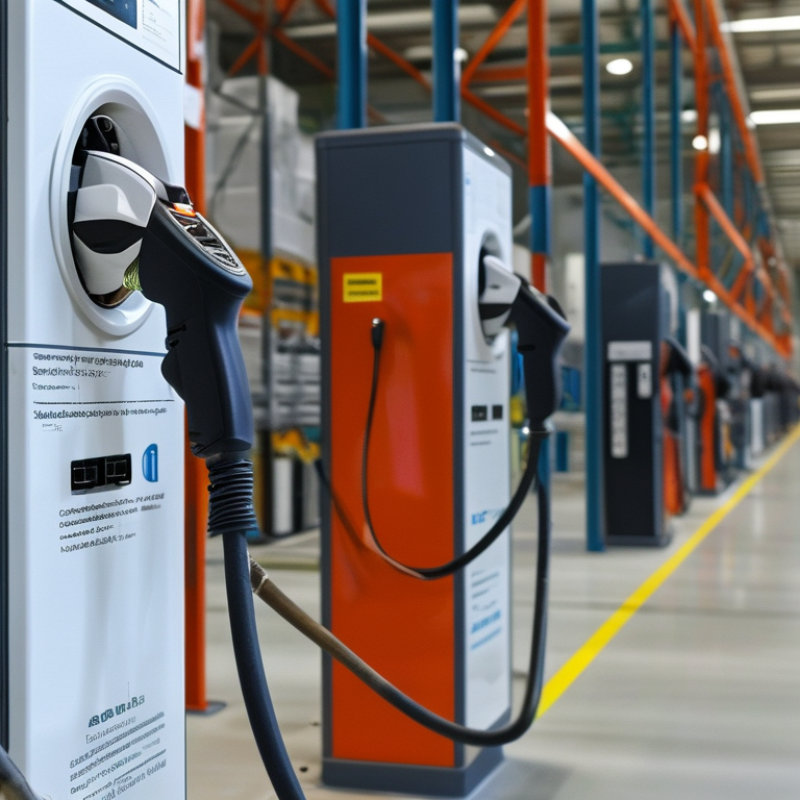
AC charging piles are electric vehicle supply equipment designed for everyday, lower-power charging. They deliver alternating current to the vehicle, while the onboard charger converts it into usable battery power. Typical installations serve homes, offices, apartment parking areas, and retail sites. IEC 61851 defines key communication and safety requirements, including control-pilot signaling and protective functions. It is more than a wall socket.
The International Energy Agency reported over four million public charging points worldwide at the end of 2023, with the network growing by more than 40% that year. Its Global EV Outlook 2024 also identifies home and workplace charging as essential to mass electric vehicle adoption. AC piles support this pattern because vehicles often remain parked for several hours. A 7 kW unit can add meaningful range overnight, while smart scheduling can reduce peak-grid pressure and energy costs.
For global buyers, performance depends on more than rated power. Field checks should examine connector standards, residual-current protection, ingress resistance, temperature control, load management, and software compatibility. The IEA estimates that public charging capacity must expand substantially by 2035 under current policy pathways. Yet market comparisons can be imperfect: published output figures may ignore cable losses, standby consumption, or harsh-weather performance. Real testing matters. A reliable AC pile should keep charging steadily beside a dusty roadside bay, not only in a showroom.
| AC Charging Category | Typical Input Supply | Typical Rated Output | Common Connector Standard | Typical Charging Application | Key International Standard | Global Buyer Consideration |
|---|---|---|---|---|---|---|
| Residential AC Level 1 | Approximately 100–120 V, single-phase | Approximately 1.4–1.9 kW at 12–16 A | Type 1 or region-specific domestic plug | Overnight home charging and low-mileage vehicles | SAE J1772; local electrical codes | Low installation cost, but slow charging and limited daily energy throughput |
| Residential AC Level 2 | 208–240 V, single-phase | Up to approximately 19.2 kW at 80 A under SAE J1772 configurations | Type 1 or Type 2, depending on market | Private homes, apartments, workplaces and destination sites | SAE J1772 or IEC 61851 | Check circuit capacity, load management, residual-current protection and certification |
| European Single-Phase AC | 230 V, single-phase | Approximately 3.7 kW at 16 A or 7.4 kW at 32 A | IEC 62196 Type 2 | Residential, commercial and public destination charging | IEC 61851-1 and IEC 62196-2 | Type 2 compatibility and local grid approval are essential for European projects |
| European Three-Phase AC | 400 V, three-phase | Approximately 11 kW at 16 A or 22 kW at 32 A | IEC 62196 Type 2 | Commercial parking, fleet depots and public charging hubs | IEC 61851-1 and IEC 62196-2 | Requires compatible vehicle onboard chargers and suitable three-phase electrical infrastructure |
| North American AC Level 2 | 208–240 V, single-phase | Commonly 7.2–11.5 kW; some configurations reach 19.2 kW | SAE J1772; newer vehicles may use an alternative combined charging interface | Homes, workplaces, retail parking and municipal charging | SAE J1772, UL 2231 and applicable local electrical codes | Verify certification, cable rating, network requirements and state or provincial rules |
| China Standard AC Charging | Approximately 220 V single-phase or 380 V three-phase | Commonly about 7 kW single-phase or approximately 21–22 kW three-phase | GB/T AC connector | Residential, workplace, public and fleet charging | GB/T 18487.1 and GB/T 20234.2 | Connector, communication protocol and national certification must match the deployment market |
| Japan-Oriented AC Charging | Approximately 100–200 V, generally single-phase | Commonly around 3–6 kW, depending on supply and vehicle charger | Type 1 is widely used for AC vehicle connections | Residential and destination charging | JEVS G105 and applicable Japanese electrical requirements | Confirm vehicle inlet compatibility, earthquake resilience and local installation requirements |
| Managed AC Charging | Single-phase or three-phase AC supply | Usually 3.7–22 kW, dynamically limited by site load | Type 1, Type 2 or GB/T according to region | Apartment buildings, fleets, workplaces and multi-port sites | IEC 61851; OCPP 1.6J or OCPP 2.0.1 for network communication | Prioritize dynamic load balancing, remote diagnostics, firmware updates and API integration |
| Public AC Charging Pile | Typically 230 V single-phase or 400 V three-phase | Commonly 7–22 kW per charging point | Type 2, Type 1 or GB/T according to local vehicle fleet | Street parking, shopping centers, hotels, airports and transport facilities | IEC 61851, IEC 62196, OCPP and local safety regulations | Evaluate uptime, payment support, weather protection, vandal resistance and maintenance coverage |
| Fleet and Workplace AC Charging | Usually 230/400 V AC, site-dependent | Approximately 7–22 kW per port, coordinated across multiple ports | Type 2, Type 1 or GB/T | Employee vehicles, delivery fleets, rental fleets and service vehicles | IEC 61851, OCPP and applicable occupational safety requirements | Total cost of ownership depends on utilization, energy management, warranty and service response |
| Core AC Charging Functions | AC power is supplied from the electrical grid | Output is limited by the pile, circuit and vehicle onboard charger | Connector and control pilot system vary by region | Power delivery, vehicle communication, authentication and charging control | IEC 61851 defines conductive charging system requirements | The vehicle onboard charger converts AC electricity into DC electricity for the battery |
| Manufacturer Qualification Dimension | Supports the target country’s voltage, frequency and earthing system | Provides documented ratings, derating curves and overload protection | Offers regionally compliant connectors and cable assemblies | Matches residential, commercial, public or fleet operating conditions | Provides test reports and applicable market certifications | Review quality systems, warranty terms, spare-parts availability, software security and after-sales service |
| Global Market Role of AC Charging | Uses existing low- and medium-voltage distribution infrastructure | Generally lower power than DC fast charging | Connector ecosystems remain regionally differentiated | Supports long-duration parking and routine daily charging | Interoperability depends on electrical, connector and communication standards | AC charging is central to home, workplace and destination charging because installation and operating costs are typically lower than high-power DC systems |
Technical values are typical reference ranges; final ratings depend on local grid regulations, installation conditions, vehicle onboard-charger capacity and product certification.





 Phone
 Send Email
 whatsapp
 Facebook
 Youtube