How to Choose the Best Home AC WallBox Charger?
Choosing the best Home AC WallBox Charger is not simply a matter of selecting the highest power rating. Your daily mileage, vehicle capacity, parking space, and household wiring all matter. A charger that looks impressive online may be unnecessary for a short commute. It may also overload an older electrical system.
Claas Bracklo, a recognized e-mobility and charging expert, has said, “Interoperability is the key to successful e-mobility.” That principle applies at home, too. A dependable Home AC WallBox Charger should communicate properly with your vehicle, support the correct connector, and offer stable charging performance. Smart features can help, but they should solve real problems. Scheduled charging may reduce energy costs. Load management may protect your home’s electrical capacity. Remote monitoring can be useful when charging occurs overnight.
Safety deserves closer attention. Check the charger’s certification, weather protection, cable length, and installation requirements. Use a qualified electrician for the assessment and installation. Do not assume every driveway outlet is ready for continuous high-current charging. That assumption can be costly.
Think about the details.
Can the cable reach your parking position without crossing a walkway? Will the unit remain usable during winter rain or summer heat? Is the warranty supported locally? These questions are less exciting than app design, but they often matter more. Some buyers, including experienced owners, focus too much on speed. A slower charger may be the wiser choice for your actual routine.
This guide compares charging power, compatibility, safety, installation, smart controls, and long-term value. It also examines common buying mistakes, because the “best” charger is rarely universal.
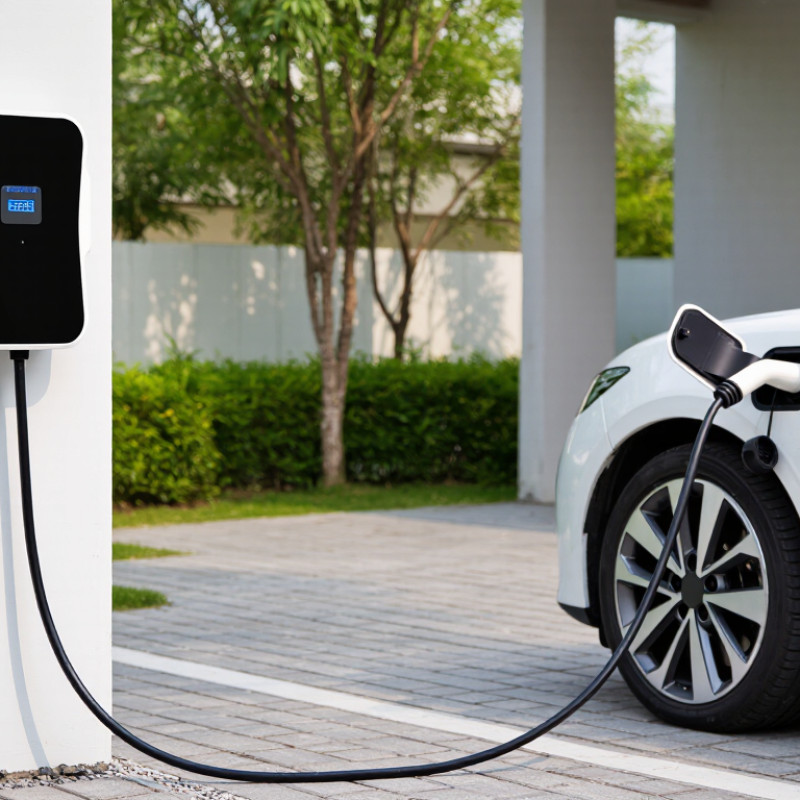
Define Home Charging Needs: Level 2 AC Wallboxes Deliver 3.7–22 kW
Choosing the best home AC wallbox begins with your daily charging routine, not the highest advertised output. Level 2 AC wallboxes commonly deliver 3.7–22 kW, depending on the electrical supply and installation. A 3.7 kW unit may suit a driver covering short distances each day. A 7.4 kW unit can usually refill more energy overnight. Higher outputs may help households with larger batteries or frequent driving. However, the vehicle’s onboard AC charger can limit the actual charging speed.
I once assumed that a 22 kW wallbox would always charge fastest. That was too simple. Many homes have single-phase power, while 22 kW often requires three-phase capacity. An electrician should check the main supply, cable size, protective devices, and local installation rules before purchase. Home load management also matters when cooking, heating, and charging happen together.
Tips: Estimate your weekly mileage and divide it by available charging hours. Check the vehicle’s maximum AC input. Choose adjustable current settings for flexible charging. Look for clear safety documentation, weather resistance, and reliable fault protection. A wallbox mounted near the parking space reduces cable strain and daily inconvenience. Do not ignore future needs, though. A larger unit may be sensible if another electric vehicle could join the household, but oversizing can increase installation costs without improving real-world charging.
Match Power to Your Electrical Supply: 7.4, 11, or 22 kW Options
How to Choose the Best Home AC WallBox Charger?
The right AC charger begins with your electrical supply, not the charger’s maximum rating. A 7.4 kW unit usually draws about 32 amps from a single-phase 230-volt connection. It suits many homes and can add roughly 35–50 kilometres of driving range overnight, depending on the vehicle.
An 11 kW charger normally requires three-phase power and draws about 16 amps per phase. It can refill a compatible battery faster, but only if the vehicle accepts 11 kW AC charging. A 22 kW model may draw approximately 32 amps per phase. That sounds impressive. Yet many vehicles are limited to 11 kW or less, making the extra capacity unused.
Ask a qualified electrician to check the service capacity, cable route, protective equipment, and household peak loads. An oven, heat pump, and charger running together can expose a weak installation quickly. Dynamic load management may reduce charging power when the home is busy. Do not rely on a simple socket rating or an online calculator alone. The safest choice is often smaller than expected. I have seen homeowners focus on speed, then discover their supply cannot support it comfortably. Leave room for measurement, changing tariffs, and future electrical upgrades.
How to Choose the Best Home AC WallBox Charger? - Match Power to Your Electrical Supply: 7.4, 11, or 22 kW Options
| Comparison point |
7.4 kW AC |
11 kW AC |
22 kW AC |
| Typical electrical configuration |
Single-phase, 230 V |
Three-phase, 400 V |
Three-phase, 400 V |
| Approximate charging current |
32 A on one phase |
16 A on each of three phases |
32 A on each of three phases |
| Energy added in one hour |
Up to approximately 7.4 kWh |
Up to approximately 11 kWh |
Up to approximately 22 kWh |
| Estimated driving range added per hour* |
Approximately 40 km |
Approximately 60 km |
Approximately 120 km |
| Best suited to |
Most homes with a standard single-phase supply and overnight charging needs |
Homes with three-phase power that need faster daily charging |
Homes with suitable three-phase capacity and frequent or high-mileage driving |
| Electrical supply requirement |
A suitable single-phase circuit with enough spare capacity |
A three-phase connection and balanced phase loading |
A three-phase connection with substantial spare capacity |
| Potential installation impact |
Usually the simplest option when single-phase infrastructure is already available |
May require three-phase cabling, protection, and an electrical capacity check |
May require an upgraded supply, larger protective devices, and higher installation cost |
| Vehicle compatibility |
Works with vehicles that support single-phase AC charging |
Requires a vehicle with an 11 kW-capable three-phase onboard charger to use the full rating |
Requires a vehicle with a 22 kW-capable three-phase onboard charger to use the full rating |
| Recommended control features |
Scheduled charging and basic load management |
Dynamic load balancing and scheduled charging |
Dynamic load balancing, phase monitoring, and scheduled charging |
| Main advantage |
Broad home-supply compatibility and lower electrical demand |
A practical balance between charging speed and supply requirements |
The fastest AC option when both the property and vehicle support it |
*Range estimates assume approximately 18 kWh of usable energy consumption per 100 km. Actual charging speed depends on the vehicle’s onboard charger, battery temperature, charging losses, cable limits, and available household capacity. A qualified electrician should verify the supply, protection, earthing, cable sizing, and local installation requirements before fitting a home wallbox.
Check Vehicle Compatibility: SAE J1772, Type 2, and IEC 61851 Standards
How to Choose the Best Home AC Wallbox Charger?
Choosing a home AC wallbox starts with the vehicle inlet, not the charger’s display. In North America, SAE J1772 commonly supports AC charging. Type 2 is widely used across Europe and several international markets. IEC 61851 defines the charging control and communication process, especially for Mode 3 charging. These standards address different parts of compatibility. A connector can fit physically, yet charging may still fail.
The IEA’s Global EV Outlook 2024 reported more than four million public charging points worldwide by the end of 2023. This rapid growth makes standard checking more important, not less. Confirm the vehicle’s inlet type, onboard charger capacity, household voltage, and maximum current. A 7.4 kW wallbox cannot make a 3.6 kW onboard charger charge faster. An adapter may solve a shape mismatch, but it cannot correct unsafe wiring or unsupported communication. That is an easy assumption to challenge.
Tips:
Read the vehicle manual before purchasing. Ask an electrician to verify circuit capacity, protection, and earthing. Check whether the wallbox supports the correct J1772 or Type 2 cable. Also confirm IEC 61851 compatibility. Do not rely only on a sales label. A professional installation report is worth keeping.
Evaluate Safety Features: RCD Protection, IP Ratings, and Load Management
Choosing the best home AC wallbox charger starts with safety, not charging speed. RCD protection should detect electrical leakage and disconnect power quickly. Some units also detect residual direct current, reducing hidden risks. Ask a qualified electrician to confirm the circuit, earthing, and protective devices. Test the protection after installation, then record the result. Small records matter. Protection cannot correct poor wiring or careless installation.
An IP rating shows how well the charger resists dust and water. For an exposed driveway, choose equipment suitable for outdoor conditions. Check both rating digits, not just the headline number. Water can enter through damaged seals or loose covers. Load management is equally important. Dynamic systems adjust charging power when ovens, heaters, or pumps are operating. This helps prevent nuisance trips and circuit overloads. It is tempting to select maximum output, but that choice may not suit an older home supply.
Tips:
Check the RCD test function monthly, if the instructions permit it. Keep the cable off standing water. Avoid extension leads. Review household demand during winter. If charging repeatedly stops, investigate the circuit instead of simply resetting it. I would also leave room for future electrical changes, because today’s safe load may become tomorrow’s problem.



 Phone
 Send Email
 whatsapp
 Facebook
 Youtube