How to Choose the Best EV Wallbox for Your Needs?
As electric-vehicle ownership grows, home charging is becoming a practical part of everyday life. The International Energy Agency reported nearly 14 million electric car sales worldwide in 2023, about 18% of all car sales. That growth makes home charging more relevant. An Ev Wallbox can turn an overnight parking spot into a regular charging point, but the right unit depends on the vehicle, home wiring, and driving routine.
Start with charging power and compatibility. The U.S. Department of Energy’s Alternative Fuels Data Center says Level 2 charging can typically add about 10–20 miles of range per hour. Actual results vary with the vehicle’s onboard charger, battery, and electrical supply. A higher-rated wallbox may not charge every car faster. Check the car’s maximum AC charging rate before paying for extra capacity. Also consider cable length: a short cable can become an everyday annoyance when the parking space is awkwardly positioned.
Installation deserves equal attention. Ask a qualified electrician to assess the panel, circuit, and cable route before choosing a model. Compare weather protection, warranty, safety certification, and whether scheduling or energy monitoring would genuinely help. Smart features sound useful. Not everyone needs them. The IEA’s Global EV Outlook 2024 offers useful context on the expanding EV market, but no global statistic can determine what suits one household. A charger can look perfect online and still be inconvenient beside your driveway. Match the equipment to the car you own, the place you park, and the miles you actually drive. There is room to reconsider. The best choice is practical, compatible, and ready for daily use.
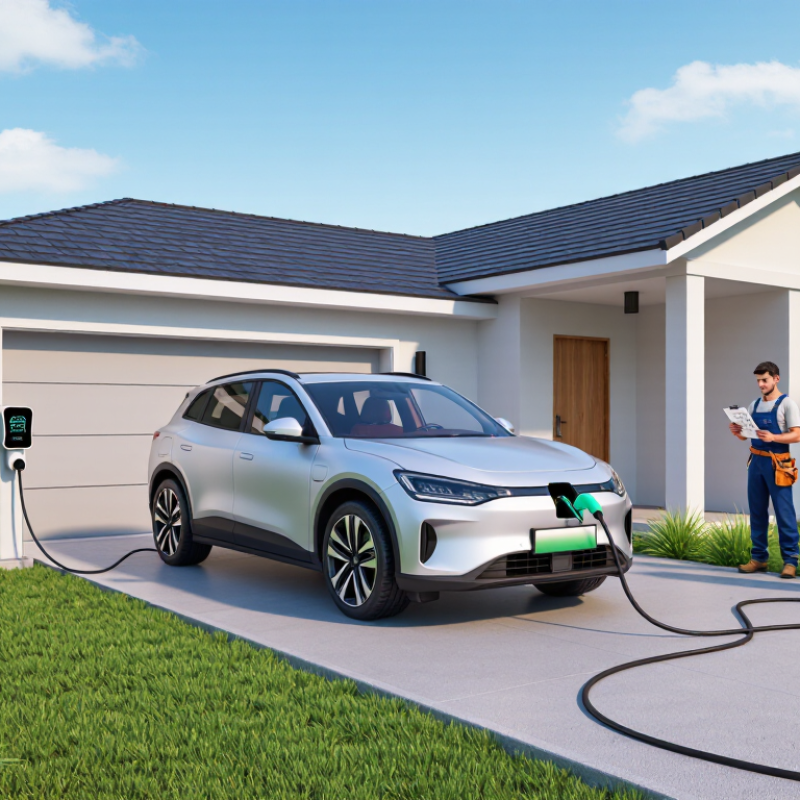
Understanding EV Wallboxes and Your Charging Needs
An EV wallbox is a dedicated home charging unit that supplies AC power to your vehicle. The car’s onboard charger converts that power for the battery, so the wallbox’s advertised output is only part of the picture. Your vehicle sets a limit, too. Check its maximum AC charging rate before paying extra for a more powerful unit.
Start with your routine. Estimate how many miles you drive on a typical day, then consider how long the car stays parked. A vehicle plugged in overnight may need less power than one returning home briefly between trips. Small details matter. A cable that reaches the driveway without crossing a walkway can make daily charging much easier. Also check connector compatibility, outdoor protection, and whether the unit can adjust charging when household demand rises. A qualified electrician can assess your wiring and available circuit capacity; an older panel may need attention. I would not choose solely by the highest charging speed. It is easy to overestimate what you need, and I might still do that if I focused only on the spec sheet. The right fit balances your car, your parking space, your electrical system, and the hours you actually have.
How to Choose the Best EV Wallbox for Your Needs? - Understanding EV Wallboxes and Your Charging Needs
| Nominal AC Output |
Typical Electrical Supply |
Best Suited To |
What to Check Before Choosing |
| 3.6 kW |
Typically 230 V, single-phase, 16 A |
Drivers with modest daily mileage or a long overnight parking window. |
Confirm the vehicle can accept this AC charging rate and that the circuit is suitable for continuous charging. |
| 7.4 kW |
Typically 230 V, single-phase, 32 A |
Many homes with single-phase service and regular overnight charging needs. |
Check the available electrical capacity, required circuit protection, and the vehicle’s maximum single-phase AC input. |
| 11 kW |
Typically 400 V, three-phase, 16 A per phase |
Homes with three-phase supply and vehicles that support three-phase AC charging. |
Verify that three-phase power is available and that the vehicle’s onboard charger supports this rate. |
| 22 kW |
Typically 400 V, three-phase, 32 A per phase |
Drivers who need faster AC charging and have compatible vehicles and sufficient electrical capacity. |
A 22 kW wallbox does not guarantee 22 kW charging: the supply and vehicle’s onboard charger may limit the actual rate. |
| Selection Factor |
Practical Guidance |
| Vehicle compatibility |
Check the vehicle’s maximum AC charging power and connector requirements. The delivered rate is limited by the lowest-capacity part of the charging setup. |
| Electrical capacity |
Have a qualified electrician assess the supply, wiring, circuit protection, and local installation requirements before selecting the output. |
| Dynamic load management |
Consider this feature if other large electrical loads could operate while the vehicle is charging. It can adjust charging power to help keep total household demand within a configured limit. |
| Scheduling and connectivity |
Choose scheduling or app connectivity if you want to set charging times or monitor sessions remotely. Confirm that the required Wi-Fi or mobile connection is available where the unit will be installed. |
| Cable and installation location |
A tethered unit has a permanently attached cable; an untethered unit uses a separate cable. Check cable reach, parking position, and whether the installation location is suitable for the unit’s environmental rating. |
| Solar or energy integration |
If you have solar generation or a home energy system, check that the wallbox supports the control features and system compatibility you need; these capabilities vary by model and installation. |
Power ratings and typical supply configurations are illustrative. Availability and electrical requirements vary by country, installation, and vehicle; a qualified electrician should confirm the suitable setup.
Checking Vehicle Compatibility and Required Charging Speed
Start with the vehicle’s limits, not the wallbox’s advertised maximum. Check the owner’s manual for its connector type and maximum AC charging rate, often listed in kilowatts. A 11 kW wallbox will not charge a car faster than its onboard charger allows. Also check whether your home supply supports the wallbox’s voltage and phase. Compatibility is more than the plug.
Then match charging speed to your routine. The U.S. Department of Energy’s Alternative Fuels Data Center estimates Level 1 charging adds roughly 2–5 miles of range per hour, while Level 2 adds about 10–20. These are estimates; vehicle efficiency, temperature, and charging losses affect real results. For example, a car parked overnight for ten hours may gain enough range from Level 2 for a daily commute, without needing the highest-power unit. Bigger is not always better.
One detail is easy to miss: compare the wallbox output with the car’s actual AC limit, then consider how many miles you need to add between drives. A licensed installer can assess circuit capacity before purchase. I would not choose by kilowatts alone; an oversized unit can add cost without shortening charging time. Check the figures against your vehicle manual and local electrical setup.
Assessing Home Power Supply and Installation Requirements
Before choosing a wallbox, check your home’s electrical service, not just the charger’s advertised power. The U.S. Department of Energy’s Alternative Fuels Data Center lists Level 2 charging at 208 or 240 volts, with equipment ranging from 3 to 19.2 kilowatts. That range is wide. A higher-rated unit may exceed what your panel can safely support alongside ovens, dryers, and heating systems. Have a qualified electrician assess the panel’s capacity and calculate the household’s actual load.
The route matters too. A charger beside the parking space may need only a short cable run; a distant garage can require extra wiring, labor, and wall work. The International Energy Agency’s Global EV Outlook 2024 identifies home charging as an important part of private EV charging. Still, access varies by housing type. Renters and residents in shared buildings may need permission or coordinated electrical upgrades. Check whether your service is 120/240-volt split-phase, and ask about a dedicated circuit, cable length, weather exposure, and any planned panel upgrades.
Leave room for uncertainty. A paper estimate can miss simultaneous appliance use or an awkward cable route. Ask the electrician to explain the load calculation and quote the full installation, including permits and any service changes. Not just the unit. A modest wallbox on a suitable circuit may be more practical than a powerful model that triggers costly upgrades.
How to Choose the Best EV Wallbox for Your Needs
Estimated Level 2 charging power by dedicated circuit size
Estimates assume a 240 V supply and EV charging current limited to 80% of the circuit rating, a common approach for continuous loads in the U.S. For example, a 40 A circuit supports up to 32 A charging, or about 7.7 kW. Before choosing a wallbox, have an electrician check your panel capacity, wiring, breaker, and installation route; local electrical requirements may differ.
Comparing Safety Features, Smart Controls, and Running Costs
Choosing an EV wallbox starts with safety, not a long feature list.
Check that the unit has suitable overcurrent and residual-current protection, plus temperature monitoring. Protection requirements vary, so ask a qualified electrician to assess your home’s wiring and supply capacity.
A warm cable or frequently tripped breaker is not a minor inconvenience. It needs attention.
Smart controls can make charging easier and cheaper.
Scheduling lets you charge during lower-tariff hours, while load balancing can reduce the risk of overloading a home circuit when appliances are running. App controls are useful, but check whether basic charging still works if your internet connection drops.
Running costs depend on your electricity tariff, charging habits, and the wallbox’s standby use.
Small details matter. A tiny standby draw adds up over months.
Tips:
Compare installation quotes as well as unit prices. Ask about cable length, weather protection, warranty terms, and future service. If you have solar panels, check whether the wallbox can respond to surplus generation.
Do not assume every “smart” feature will save money; estimate savings using your actual tariff and routine.
I would leave a little room for doubt in those estimates.
Choosing a Wallbox for Your Budget and Future Plans
Choosing a wallbox is less about buying the highest power rating and more about matching your home, car, and daily routine. Check your vehicle’s maximum AC charging rate and your home’s available electrical capacity before comparing units. A 7 kW wallbox may suit overnight charging for many drivers. A higher-rated unit will not make a car charge faster if the car cannot accept that power. Installation costs matter, too; cable routing from the electrical panel to your parking spot can change the quote. Small details matter.
Think beyond today’s vehicle. If you may switch cars, add solar panels, or share charging at home, consider future needs. Adjustable current, load balancing, and scheduling can be useful, but they add cost and setup choices. I would not pay extra for every smart function just in case. Some features may rarely be used.
Tips: Measure the route from the panel to your parking spot, and allow extra cable reach. Ask a qualified installer to assess your electrical supply and explain the full installation cost. Compare installed prices, not just wallbox prices. Leave some budget for surprises; older wiring can complicate a plan.




 Phone
 Send Email
 whatsapp
 Facebook
 Youtube