Why Should Your Business Invest in EV Chargers Now?
In today's rapidly evolving marketplace, investing in EV chargers for business is not just an option but a necessity. As the demand for electric vehicles (EVs) surges, companies that adapt will gain a competitive edge. According to a report by the International Energy Agency (IEA), global electric car sales reached 6.6 million in 2021, representing a 108% increase from the previous year. This growth signals a dire need for more charging infrastructure to support both consumers and businesses.
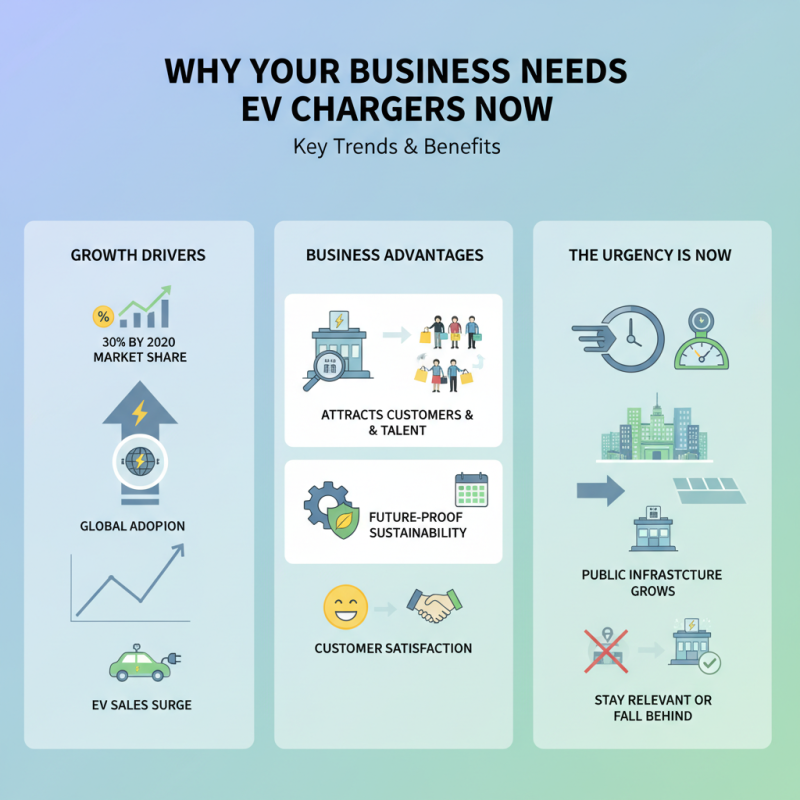
Industry expert, David Ferris, a consultant for electric mobility solutions, states, “Businesses that invest in EV chargers now will not only future-proof their operations but also attract a new customer base.” His insights highlight the dual advantage of embracing this technology. Moreover, a recent study from the Rocky Mountain Institute projects that EV market penetration could exceed 30% of all vehicle sales by 2030.
However, some companies still hesitate. The high initial investment can seem daunting. Furthermore, as public infrastructure grows, the pressure on businesses to install charging solutions intensifies. Ignoring this trend could mean losing relevance in an increasingly eco-conscious economy. Investing in EV chargers for business is vital for growth, sustainability, and customer satisfaction.
The Growing Demand for EVs: Market Trends and Projections
The electric vehicle (EV) market is rapidly growing. More consumers are choosing EVs for their environmental benefits. Market projections indicate that by 2030, EV sales could reach over over 30 million units annually. This shift represents a significant opportunity for businesses. Investing in EV chargers now can cater to this increasing demand. Companies that innovate early can capture market share as more drivers look for convenient charging options.
The infrastructure for EV chargers is developing alongside the vehicle market. Local governments are promoting EV adoption through incentives and support. This creates a favorable environment for businesses to invest in charging networks. As more motorists transition to electric, having accessible charging stations will enhance customer experience. Properly placed chargers can attract repeat customers. It's essential to consider the geographical and demographic factors in your location when planning installation.
However, investment in charging infrastructure isn't without challenges. High initial costs and varying regulations can deter some businesses. Planning for future technology upgrades is crucial, as the EV market is continually evolving. Balancing upfront costs with potential long-term benefits requires careful consideration. Despite potential hurdles, the demand for EVs will likely continue to rise. Confidently investing in EV chargers can position businesses for success in an electrified future.
Understanding the Economic Benefits of EV Chargers for Businesses
Electric vehicle (EV) chargers present a unique opportunity for businesses to tap into a growing market. With over 14.5 million EVs projected on U.S. roads by 2030, companies can benefit significantly from investing in charging infrastructure. According to a report by McKinsey, businesses that add EV chargers can expect a 25% increase in customer dwell time, leading to higher sales.
Adding chargers can also enhance a company’s reputation. According to a study by Bloomberg, 70% of consumers prefer brands that adopt sustainable practices. Offering charging solutions creates a positive brand image. However, investing in EV chargers requires upfront costs, which can be a hurdle. Balancing the initial investment with long-term returns is essential.
Tip: Analyze your customer demographics to understand potential demand. Installing chargers in urban areas or near highways can attract more EV owners. Consider offering incentives, like discounts for charging, to encourage usage. This strategy not only generates revenue but also fosters customer loyalty.
Government Incentives and Tax Benefits for EV Charger Installation
As the electric vehicle (EV) market continues to grow, businesses face pressure to adapt. Installing EV chargers not only meets customer demand but also unlocks significant financial opportunities through government incentives. Recent reports indicate that incentives can cover up to 50% of installation costs, boosting a company's return on investment.
In 2023, the federal government expanded tax credits for EV charger installation. Businesses can now receive a tax credit of up to 30% of the total installation costs. This creates a strong incentive to make the switch now. Additionally, state and local governments are offering various grants and rebates that can further reduce costs. These incentives are designed to encourage the transition towards sustainable energy and improve infrastructure.
However, many businesses are slow to act. Some worry about the initial investment or the logistics of installation. There are valid concerns about maintenance and technology evolution. Yet, the long-term benefits often outweigh these challenges. By integrating EV chargers, businesses can enhance customer satisfaction and improve their brand image. Balancing immediate hesitations with future gains is crucial in this evolving landscape.
Why Should Your Business Invest in EV Chargers Now?
Government incentives and tax benefits are significantly enhancing the financial appeal of installing EV chargers for businesses. The following chart illustrates the estimated savings from different levels of EV charger installation based on available incentives.
Enhancing Customer Experience: Attracting Eco-Conscious Consumers
As electric vehicles (EVs) gain popularity, businesses must adapt to meet changing consumer expectations.
Eco-conscious consumers are choosing brands that support sustainability.
Installing EV chargers can enhance their experience
and attract a loyal customer base.
Data from the International Energy Agency shows that global EV sales doubled between
2020 and 2021. As more consumers drive EVs, the demand for charging infrastructure will only rise.
A survey by Deloitte found that 70%
of respondents would consider shopping at a location with EV charging stations. This statistic reveals
a clear opportunity for businesses to draw in eco-minded customers.
Tips for implementation:
- Research local incentives for installing EV chargers.
Some regions offer financial assistance, making the transition easier.
- Promote the availability of chargers through social media
and in-store signage. Visibility can drive foot traffic.
- Consider partnering with local green organizations to enhance
community engagement. This could improve brand perception among environmentally conscious shoppers.
Offering EV charging options not only meets current
customer demand but also positions businesses as forward-thinking. However, it’s essential to assess
your location’s viability. Some areas may not have sufficient EV adoption yet, so careful planning is crucial.
Keeping a pulse on local market trends will help ensure that your investments align with consumer behavior.
Future-Proofing Your Business: The Role of EV Infrastructure Development
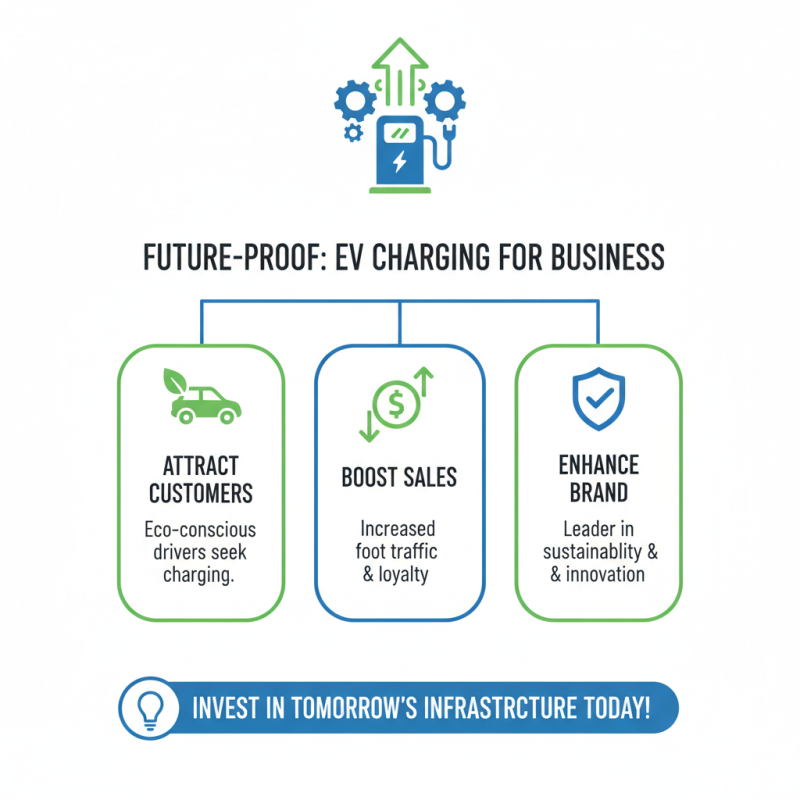
Investing in EV infrastructure is crucial for future-proofing your business. As electric vehicles become more popular, the demand for charging stations will grow. By integrating EV chargers now, your business can attract eco-conscious customers. This not only boosts sales but also enhances your brand image as a leader in sustainability.
Installing EV chargers may seem costly, yet it can yield significant long-term benefits. Research suggests that businesses with charging options see increased foot traffic. However, this transition comes with challenges. Understanding local regulations and grid limitations is essential. Additionally, not all locations may prove viable for charging stations.
The landscape of transportation is changing rapidly. Embracing EV infrastructure is not just a trend; it’s a necessity. Investing now may seem daunting, but failing to adapt could leave your business behind. Engaging expert consultants can help navigate these complexities. As the market evolves, businesses must take steps today to secure their future.






 Phone
 Send Email
 whatsapp
 Facebook
 Youtube