What is a Portable EV Charging Station and How Does It Work?
The rise of electric vehicles (EVs) has transformed the automotive industry. As of 2022, global EV sales surpassed 10 million units, indicating a strong shift towards sustainable transport. However, charging infrastructure remains a challenge. This is where the Portable EV Charging Station comes into play.
These stations offer flexibility and convenience. Users can recharge their EVs anywhere, from homes to remote locations. Furthermore, a recent report revealed that 60% of EV owners prefer portable solutions for emergency charging situations. These devices are lightweight, compact, and easy to use. Yet, they often lack power compared to standard chargers.
As the market evolves, ensuring compatibility with various EV models is essential. The Portable EV Charging Station can be a game-changer, but it's not without its flaws. Users should consider the charging speed and energy efficiency when using these stations. Despite these challenges, the potential for portable solutions in the EV market is significant.
Definition of Portable EV Charging Stations
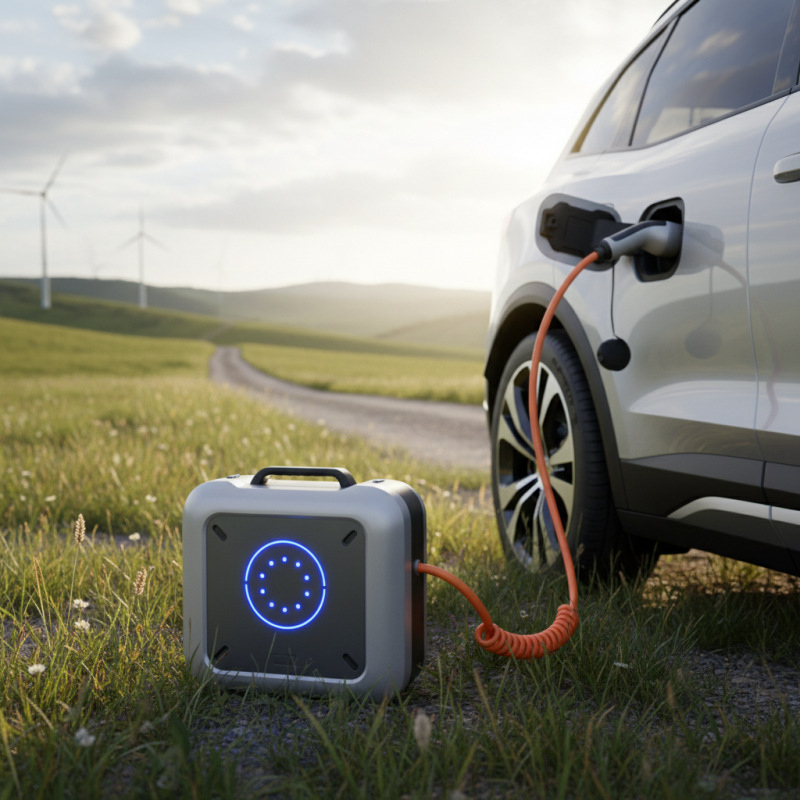
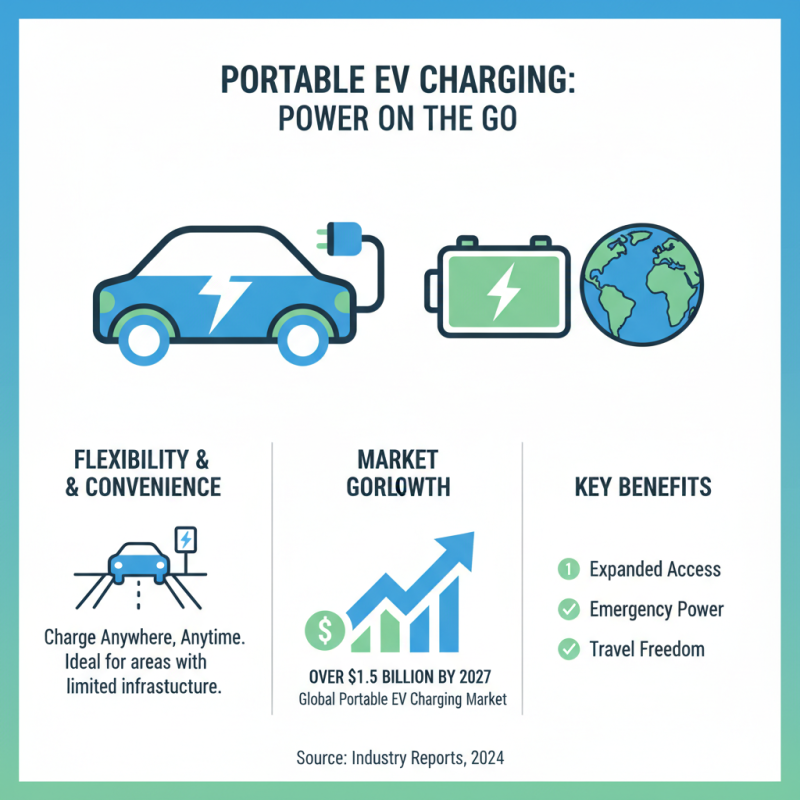
Portable EV charging stations are pivotal for electric vehicle owners. They provide flexibility and convenience, especially in areas with limited charging infrastructure. According to industry reports, the global portable EV charging market is expected to grow significantly, reaching over $1.5 billion by 2027. This growth highlights the increasing demand for versatile charging solutions.
A portable EV charging station typically connects to a standard household outlet or a three-phase power source. Users can charge their vehicles from virtually any location. This accessibility is vital for those living in urban areas where charging stations are scarce. However, one must consider the charging speed, as portable units may not charge as quickly as fixed units. Current data suggests that while many portable chargers deliver between 3.6 kW to 7.2 kW, traditional charging stations often exceed 22 kW.
The design of these stations varies widely. Some are lightweight and compact, making them easy to transport. Others are more robust but less portable. Yet, not all solutions are perfect. Users often face issues with compatibility and power requirements. Reports indicate that about 30% of EV owners have experienced difficulties finding compatible chargers. Continuous innovation is necessary to address these concerns and improve user experience.
Components of Portable EV Charging Stations
Portable EV charging stations are gaining traction as electric vehicle (EV) adoption increases. These devices offer flexibility, convenience, and immediate access to charging without needing fixed infrastructure. Understanding their components illuminates their functionality.
Key components include the charging unit, connectors, and power source. The charging unit regulates the power flow to the vehicle. Connectors vary, accommodating different EV models. Most portable stations can handle up to 22 kW, catering to most home and public needs. A report from the International Energy Agency highlights that portable chargers account for a growing segment, expected to reach 10 million units by 2025.
Tips: Always check the power output of your portable charger. Lower wattage may extend charging times. Ensure the connector type matches your vehicle's specifications. Not all models are universal.
Another important part is the power source, which can be a standard outlet or a higher capacity plug. While this versatility is beneficial, it's essential to know that charging speeds can differ significantly. A common oversight is not accounting for the compatibility and output level of household sockets.
Tips: Consider your charging habits before buying. Assess how often you'll need to use the portable charger away from home. This consideration can save you time and energy.
How Portable EV Charging Stations Operate
Portable EV charging stations have become popular for many electric vehicle owners. These compact devices enable users to recharge their vehicles without being confined to traditional charging infrastructures. They are designed to be easily transportable and can fit into the trunk of most cars.
When it comes to operation, portable EV charging stations typically use standard electrical outlets. They often come with adjustable settings to accommodate different types of electric vehicles. Users simply plug the charger into a compatible outlet, then connect it to the vehicle. The charging process starts automatically, providing a convenient solution for those who need power on the go. However, charging speed can vary. Sometimes, finding an appropriate outlet can be challenging.
These stations may not always deliver the fastest charge. Factors like outlet type and power supply can affect the charging rate. It might take longer than expected in some situations. Additionally, users need to remain mindful of safety precautions. Overheating or faulty connections can pose risks. So, ensuring the equipment is in good condition is essential for safe charging practices.
Advantages of Using Portable EV Charging Stations
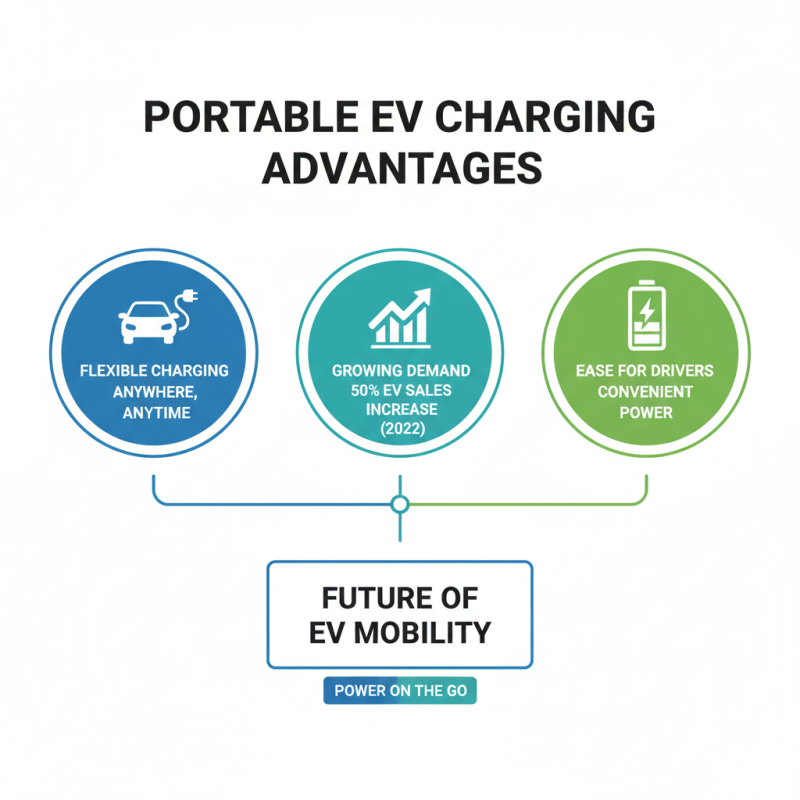
Portable EV charging stations offer significant advantages for electric vehicle owners. They provide flexible charging options, making it easier for drivers on the go. With rising electric vehicle sales—statistics show a 50% increase in 2022 alone—demand for portable charging solutions is climbing.
These stations can be used in various locations, whether at home, work, or during travel. A report from the International Energy Agency highlighted that up to 80% of EV charging occurs at home. However, challenges remain. Not all portable chargers have the same power output. Some may take longer to charge a vehicle than others.
Flexibility in charging is a huge plus. Drivers can avoid lengthy waits at public stations. However, not all are equipped to handle the latest EV models. It’s crucial to assess compatibility before purchasing. According to industry experts, the ideal charging station should be user-friendly and versatile. Consumers need to be informed about their options before making a decision.
Applications and Use Cases for Portable EV Charging Stations
Portable EV charging stations provide versatile solutions for electric vehicle owners. These devices can charge vehicles in various settings, from homes to outdoor events. According to a report by the International Energy Agency, global EV sales are projected to reach 145 million by 2030. This surge amplifies the need for accessible charging options.
Applications for portable EV chargers are diverse. They are ideal for road trips or charging at workplaces. In emergency scenarios, they can ensure drivers aren’t stranded. Recent data shows that 70% of EV owners worry about charging locations. Portable chargers can ease these concerns. These chargers can connect directly to standard outlets. However, they may take longer compared to fixed stations.
As the need for charging grows, portability becomes more critical. However, challenges remain. Infrastructure development is not keeping pace with EV growth. A study by BloombergNEF suggests that the charging network needs to triple by 2030. Many users feel limited by current choices. Mobile chargers strive to fill these gaps, but they can face power limitations. The evolution of technology is essential to improve efficiency and convenience. While portable chargers are a step forward, more work is needed to solve existing issues.
What is a Portable EV Charging Station and How Does It Work? - Applications and Use Cases for Portable EV Charging Stations
| Aspect |
Details |
| Definition |
A portable EV charging station allows electric vehicle owners to charge their vehicles in various locations quickly. |
| Power Supply |
Typically powered by standard household outlets, 240V outlets, or higher voltage connections. |
| Charging Speed |
Varies according to the power source and model; can charge from 3.7 kW to 22 kW or more. |
| Applications |
Home charging, road trips, workplaces, and emergency charging scenarios. |
| Portability |
Lightweight and compact design for easy transport to different charging locations. |
| Benefits |
Convenience, flexibility, and increased range confidence for EV owners. |
| Limitations |
Charging speed may be slower than traditional charging stations; reliance on available power sources. |





 Phone
Phone Send Email
 whatsapp
 Facebook
 Youtube