Top 10 Ev Charging Equipment Manufacturers to Consider?
The electric vehicle (EV) market is experiencing rapid growth globally. According to a report by the International Energy Agency, EV sales surged by 40% in 2021, reaching 6.6 million units. This surge in demand has led to an urgent need for reliable EV charging infrastructure. Consequently, selecting the right EV Charging Equipment Manufacturers is crucial for individuals and businesses.
Several key players dominate this industry. They offer a range of products, from home chargers to commercial solutions. Companies must consider not just product quality, but also the network of support and installation services. Furthermore, as technology evolves, manufacturers need to adapt quickly to meet customer needs. Not all manufacturers excel at this fast pace.
With the market's growth, a gap exists in understanding the varying capabilities of different manufacturers. Some focus on innovation, while others emphasize reliability. Users must weigh these factors when choosing the right EV charging solutions. This exploration of top manufacturers sheds light on their strengths, weaknesses, and unique offerings.
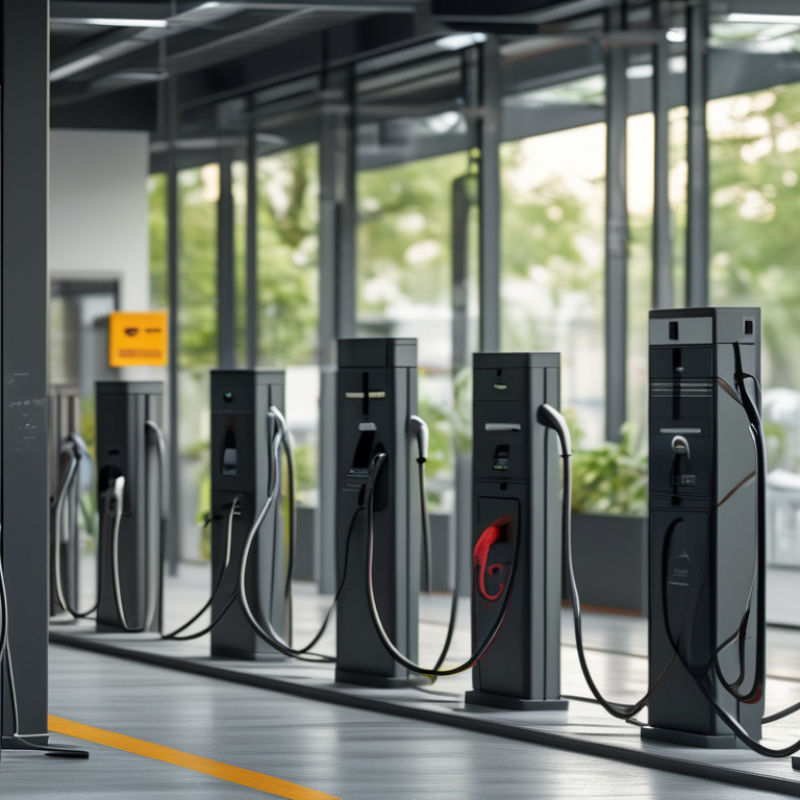
Overview of EV Charging Equipment Market Trends
The EV charging equipment market is evolving rapidly. There is a significant shift towards faster charging solutions. Many manufacturers focus on high-speed chargers to meet consumer demands. The need for accessible charging stations is growing in urban and rural areas alike.
As the adoption of electric vehicles increases, the infrastructure must keep pace. This creates opportunities for innovation in charging technology. Brands are investing in smart charging systems that enable efficient energy management. These systems help in reducing peak loads on the grid. However, challenges remain in standardization across different regions.
Quality remains a concern in the market. Some charging equipment may not perform as advertised. This can lead to frustration among users. Reliability and safety are paramount as the industry matures. Companies must navigate regulatory hurdles while ensuring product compliance. This balancing act presents both a challenge and an opportunity for growth. As the landscape evolves, consumers will demand more transparency and accountability from manufacturers.
Key Features to Look for in EV Charging Equipment
When selecting EV charging equipment, key features are paramount. One essential aspect to consider is charging speed. Data from industry reports reveals that fast chargers can significantly reduce the time needed to recharge electric vehicles. AC Level 2 chargers usually provide charging speeds of 10-60 miles of range per hour, while DC fast chargers can add 100 miles of range in about 30 minutes. This variability affects the convenience for users.
Another critical feature is compatibility. Equipment should support multiple charging standards to accommodate various EV models. The International Energy Agency (IEA) estimates that nearly 25% of EVs in 2022 were compatible with both Level 1 and Level 2 charging stations. Ensuring universal compatibility helps reduce infrastructure limitations and encourages broader EV adoption.
Safety and durability are also non-negotiable features. High-quality EV chargers need to meet rigorous safety standards. Reports indicate that equipment failure often stems from inadequate protection against environmental factors. Weather-resistant casings and built-in surge protection can prolong the lifespan of charging stations. As charging infrastructure grows, manufacturers should prioritize these vital features to ensure reliability and user trust.
Top 10 EV Charging Equipment Manufacturers: A Comparative Analysis
With the rise of electric vehicles (EVs), the demand for charging infrastructure has surged. According to a recent report from the International Energy Agency, global electric car stock exceeded 10 million in 2020, and this number is projected to reach 145 million by 2030. This dramatic increase necessitates a comprehensive examination of EV charging equipment manufacturers.
Factors to consider include charging speed, durability, and compatibility. An analysis reveals that fast chargers can fill up a vehicle's battery to 80% in under 30 minutes. Despite advancements, some manufacturers struggle with reliability and maintenance. Reports indicate that inconsistent performance in charging stations can deter EV users. Recognizing these inconsistencies is vital for selecting reliable equipment.
**Tip:** When considering EV charging options, examine user reviews and feedback. Real-world experiences often provide insight into equipment performance beyond specifications.
Cost is another critical factor. Installation expenses can vary, with reports suggesting costs from $1,000 to $5,000 depending on equipment and infrastructure needs. A thorough understanding of total costs, including installation, is essential since some manufacturers may advertise low equipment prices but overlook installation complexities.
**Tip:** Always request a breakdown of potential costs from suppliers. Understanding all financial aspects helps make an informed decision.
As the market continues to evolve, staying updated on trends and advancements is necessary. Regularly reviewing industry reports ensures that consumers make informed choices.
Top 10 EV Charging Equipment Manufacturers: Comparative Analysis
Innovative Technologies in EV Charging Solutions
As the demand for electric vehicles (EVs) surges, innovative technologies in EV charging solutions are becoming essential. Designers and engineers are exploring new ideas to enhance user experience. Smart charging stations are one example. They enable dynamic pricing based on demand and time of use. This helps to balance the load on the grid and save money for users.
Wireless charging is another noteworthy innovation. This technology eliminates the hassle of plugging in a vehicle. Instead, users can charge their EVs simply by parking over a charging pad. However, this technology has its challenges. Efficiency rates may not be on par with traditional plug-in methods. Further improvements are necessary to make wireless charging a feasible option for all.
Fast-charging technology is also advancing rapidly. Today’s fast chargers can deliver significant range in just 20-30 minutes. This speed is essential for long-distance travel. Yet, the implementation of such stations can be complex. Infrastructure requirements and costs present barriers to widespread adoption. Users and manufacturers continue to navigate these hurdles together.
Top 10 EV Charging Equipment Manufacturers
| Manufacturer |
Charging Speed (kW) |
Connector Types |
Smart Features |
Warranty (Years) |
| Manufacturer A |
150 |
CCS, CHAdeMO |
Mobile App, Power Management |
3 |
| Manufacturer B |
100 |
Type 2 |
Remote Start, Diagnostics |
5 |
| Manufacturer C |
50 |
J1772 |
Energy Monitoring |
2 |
| Manufacturer D |
175 |
CCS, Type 2 |
Integration with Solar |
4 |
| Manufacturer E |
22 |
Type 2, J1772 |
Scheduled Charging |
3 |
| Manufacturer F |
80 |
CCS |
User Authentication |
5 |
| Manufacturer G |
300 |
CHAdeMO, CCS |
Fleet Management |
6 |
| Manufacturer H |
7.4 |
Type 2 |
Smart Grid ready |
2 |
| Manufacturer I |
95 |
J1772, CCS |
Smart Monitoring |
3 |
| Manufacturer J |
22 |
Type 2, CCS |
Vehicle-to-Grid |
4 |
Future Trends in EV Charging Equipment Development
The EV charging landscape is rapidly evolving. Future trends point towards enhanced charging speeds and smarter technology. This evolution is driven by the increasing demand for electric vehicles. Manufacturers are prioritizing fast charging solutions that can significantly reduce downtime for drivers. Emerging technologies promise charging times that rival traditional refueling.
Sustainability plays a crucial role in future developments. Charging stations are incorporating renewable energy sources. This shift helps reduce the carbon footprint. Smart grid integration is also on the horizon. It enables better energy management, aligning power supply with demand.
However, challenges persist. Infrastructure development can’t keep pace with demand. Not all regions have adequate charging stations. This limits the growth of electric vehicle adoption. Companies must address these shortcomings to ensure a seamless experience for users. Continued innovation and investment in infrastructure are essential for the future of EV charging.



 Phone
Phone Send Email
 whatsapp
 Facebook
 Youtube