Top 10 Outdoor Electric Car Chargers You Should Consider?
As electric vehicles become popular, the need for convenient charging solutions is growing. An Outdoor Electric Car Charger is essential for any EV owner who enjoys road trips or outdoor activities. These chargers offer flexibility, allowing users to charge their vehicles in various locations.
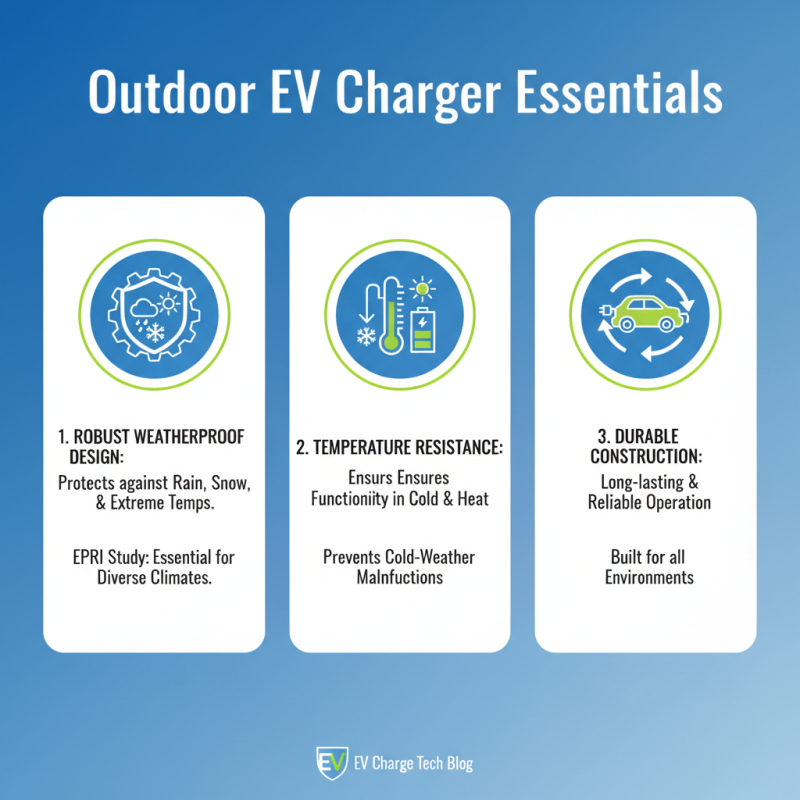
Consider the weather when choosing an outdoor charger. Rain, snow, and heat can affect performance. Some chargers may not withstand harsh conditions. It is important to select a durable model to ensure reliability. Look for chargers with weather-resistant features to prevent malfunction during unpredictable conditions.
Not all outdoor chargers are created equal. Some models are compact, while others are bulkier. Think about your specific needs and space when selecting. While a high-tech option may seem appealing, simpler models can be effective too. Reflect on your preferences and usage habits before making a choice. Investing in an Outdoor Electric Car Charger is not just about convenience; it enhances your driving experience.
What to Look for in an Outdoor Electric Car Charger
When choosing an outdoor electric car charger, consider several key factors. The installation process can vary. Some chargers require professional installation, while others can be easily set up by the user. It’s important to assess your electrical capacity. Ensure your home can support the charger’s requirements without overloading your system.
Charging speed is also essential. Look for chargers that offer different power levels. Faster chargers can significantly reduce wait time. However, be aware that not all electric vehicles can handle high charging speeds. Compatibility is crucial. Your charger must work seamlessly with your vehicle.
Tips: Always check the weatherproof rating. Exposure to rain and snow can damage less durable chargers. Additionally, think about future-proofing. Choose a model that can be updated with new technology over time. This can save you from needing to replace it sooner than expected.
Don’t forget ease of use. A user-friendly interface can make a difference, especially for less technical users. Consider if smaller designs could fit better in your space. Larger units might not always be necessary, but they can offer additional features. Always weigh your options carefully.
Top 10 Outdoor Electric Car Chargers You Should Consider
| Charger Model |
Charging Speed (kW) |
Price ($) |
Weather Resistance |
Smart Features |
| Model A |
7.2 |
600 |
IP67 |
Yes |
| Model B |
22 |
800 |
IP65 |
No |
| Model C |
11 |
700 |
IP68 |
Yes |
| Model D |
3.6 |
400 |
IP54 |
No |
| Model E |
7.2 |
600 |
IP66 |
Yes |
| Model F |
22 |
850 |
IP55 |
Yes |
| Model G |
11 |
700 |
IP67 |
No |
| Model H |
22 |
900 |
IP68 |
Yes |
| Model I |
7.2 |
650 |
IP65 |
No |
| Model J |
3.6 |
450 |
IP54 |
Yes |
Types of Outdoor Electric Car Chargers Available
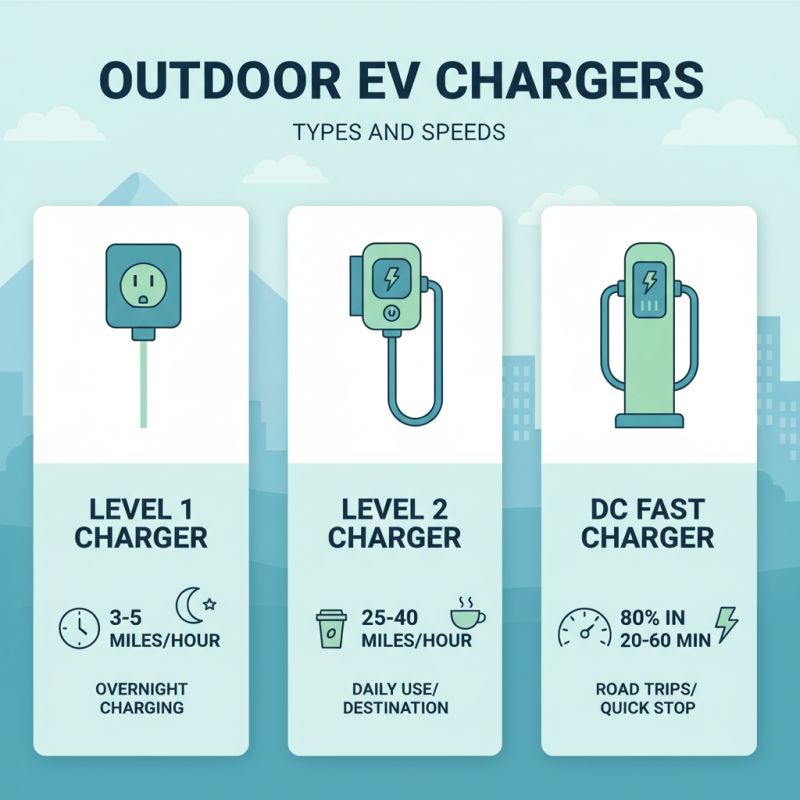
When considering outdoor electric car chargers, various types are available. Each type has specific features that cater to different needs. Level 1 chargers use a standard household outlet and are easy to access. However, they charge slowly, adding about 3-5 miles of range per hour. These are suitable for overnight charging but not for quick top-ups.
Level 2 chargers are more popular for outdoor use. They can deliver around 10-60 miles of range per hour, depending on the power output. This makes them ideal for public charging stations. According to a report by the Department of Energy, there are over 20,000 Level 2 stations across the United States. Fast chargers take it a step further. They can typically charge vehicles up to 80% in 30 minutes. However, they require specialized infrastructure and aren't as commonly found in residential areas.
When selecting a charger, consider the installation location. Outdoor chargers need weatherproofing and durable materials. You should also think about cable length, accessibility, and compatibility with your vehicle. A shorter cable might save space but could limit where you park.
Tips: Always verify local electrical codes before installation. Make sure your circuit can handle the charger you choose. Regularly check for wear and tear on outdoor chargers. Exposure to elements can impact performance over time. Be mindful of the maintenance needs for long-term use.
Top Features of the Best Outdoor Electric Car Chargers
When considering outdoor electric car chargers, certain features stand out. A robust weatherproof design is essential. It protects against rain, snow, and extreme temperatures. A study by the Electric Power Research Institute (EPRI) indicates that chargers need to endure various climates to function effectively. For instance, chargers in colder regions can face issues if not designed to withstand low temperatures.
Another key feature is the charging speed. Level 2 chargers typically provide a faster charge than Level 1. According to the U.S. Department of Energy, Level 2 chargers can deliver electricity at a rate of 10-20 miles of range per hour. This makes them ideal for quick stops during your outdoor adventures. It’s important to assess how quickly you can charge your vehicle while on the go.
Connectivity features also play a vital role. Smart chargers allow users to monitor charging status through mobile apps. This technology is becoming standard. However, not all models offer this capability. It’s worth reflecting on how often you’d use these features. There may be situations where simplicity is more valuable than advanced tech. Balancing features with practical use can lead to better decision-making when choosing an outdoor charger.
Comparing Charging Speeds and Compatibility
Outdoor electric car chargers vary widely in charging speeds and compatibility. Users often overlook these key features. A fast charger can significantly reduce downtime when on the road. Some units deliver power up to 80% in just 30 minutes. This can be crucial for long trips. However, not all chargers support every vehicle.
Compatibility is another critical consideration. Many chargers work with a range of vehicle models, but some are limited. Users frequently find that older car models can struggle with new charging technologies. This creates frustration and unexpected delays. It's essential to check if your vehicle aligns with the charger’s capabilities. The ideal charger should not only charge quickly but also be widely compatible.
Finding the right balance between speed and compatibility is challenging. Many users rely on online reviews for guidance. Yet, these can sometimes mislead. Personal experiences vary widely. The charger that works perfectly for one model may not be suitable for another. It’s wise to conduct thorough research before making a choice. This might involve visiting charging stations in person to understand functionality better.
Installation and Maintenance Tips for Outdoor Chargers
When considering outdoor electric car chargers, installation and maintenance play a crucial role. A report from the International Energy Agency indicates that proper installation can enhance charging efficiency by up to 30%. Location is key. Choose a spot that’s sheltered from severe weather to protect the charger.
Regular maintenance is essential for optimal performance. It’s advised to inspect wiring and connectors periodically. Keep the charging unit clean and free from debris. A survey shows that 40% of users neglect routine checks, which can lead to charging issues.
Here are some tips: Ensure your charger is installed by a qualified technician. They can help mitigate electrical hazards. Regularly check for signs of wear. If anything looks off, consult a professional. Simple actions, like removing ice or snow during winter, can significantly extend the life of your charger.



 Phone
Phone Send Email
 whatsapp
 Facebook
 Youtube