
Leave Your Message
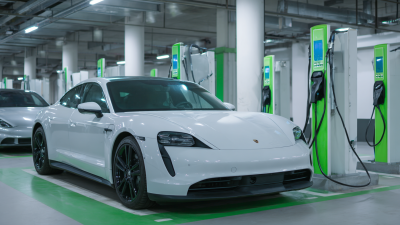
Electric vehicle ownership is expanding, but convenient charging still depends on location, time, and electrical access. The International Energy Agency reported nearly 14 million electric cars sold worldwide in 2023. It also expects global electric car sales to keep rising sharply through 2024. More vehicles create a practical question: what happens when a fixed charging station is unavailable?
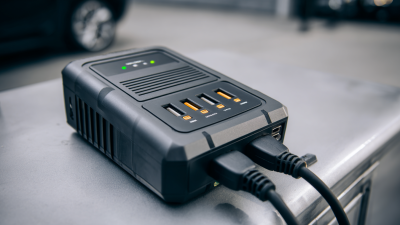
A Portable Electric Vehicle Charger is a compact charging device that connects an EV to a suitable power source. Many models use a standard household outlet, while others support higher-current outlets or destination charging points. A typical unit includes a control box, charging cable, safety monitoring, and vehicle connectors. It can remain in a trunk, ready for overnight charging at home, a rental property, or a remote workplace. The United States Department of Energy’s Alternative Fuels Data Center distinguishes Level 1 and Level 2 charging by voltage, current, and charging speed. Therefore, “portable” does not automatically mean “fast.”
That distinction is easy to miss. A household outlet may add only several miles of range per hour, depending on the vehicle and circuit. A 240-volt connection can deliver more energy, but it requires compatible wiring and professional installation. SAE and IEC charging standards also influence connector compatibility and safety requirements. Buyers should verify amperage, weather resistance, grounding protection, and vehicle compatibility before purchase. The answer is useful, but not perfect. Charging speed varies widely. Even the best portable unit cannot overcome a weak electrical supply. Understanding those limits makes the technology more practical, safer, and easier to evaluate.
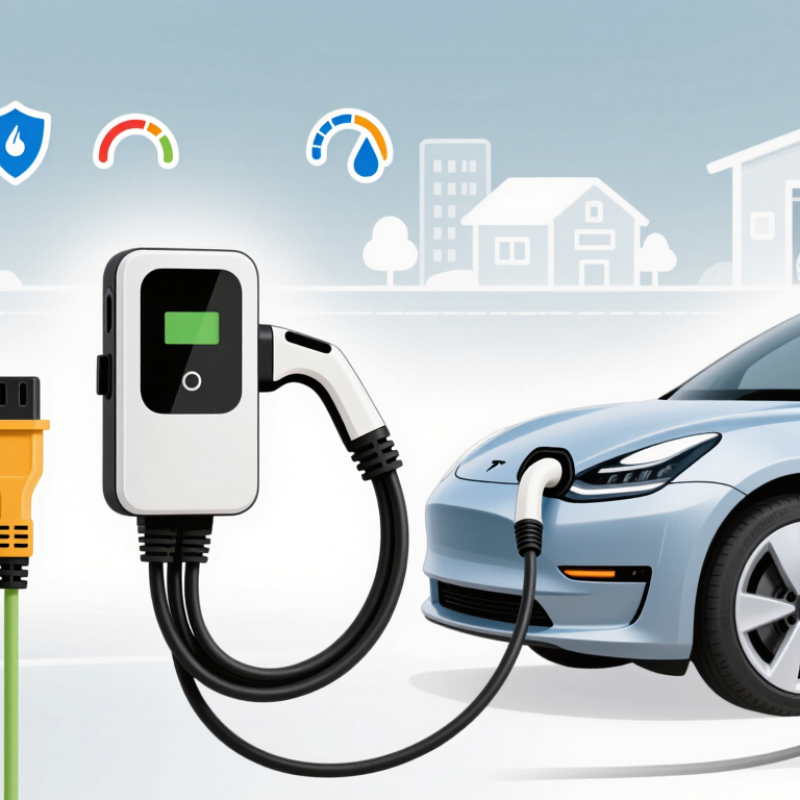
A portable electric vehicle charger is a movable device that connects an electric car to an electrical outlet. It is often called portable EVSE, or electric vehicle supply equipment. The term can mislead. It does not store electricity like a large battery pack. Instead, it manages power flowing from the outlet to the vehicle.
Most units include a charging cable, a household or industrial plug, and a control box. The control box checks the connection and communicates with the car before charging begins. Charging speed depends on the outlet, circuit capacity, cable rating, and vehicle settings. A standard household outlet may provide slow overnight charging. A higher-rated outlet can charge more quickly, but only when the circuit supports it. Real-world charging is rarely as simple as plugging in anywhere.
Safe use requires practical attention. Inspect the cable for cuts, heat damage, or loose connections before each session. Keep the control box away from standing water, even when the cable is weather-resistant. Use a properly grounded outlet and avoid ordinary extension cords unless the equipment instructions specifically allow them. A warm plug deserves investigation. So does repeated circuit tripping. Portable does not mean universally compatible, and that assumption causes avoidable problems. An electrician can verify outlet condition, grounding, and circuit capacity before regular use. The best setup may still be inconvenient. That limitation is worth acknowledging before relying on it for daily travel.
| Data Dimension | Typical Data | Practical Meaning |
|---|---|---|
| Definition | A portable electric vehicle supply equipment unit, commonly called a portable EV charger | It safely delivers electricity from an AC power outlet to an electric vehicle. The vehicle’s onboard charger converts AC electricity into DC electricity for the battery. |
| Primary Charging Type | AC charging, usually Level 1 or Level 2 | Portable units are generally designed for overnight, workplace, travel, or backup charging rather than high-power rapid charging. |
| Input Voltage | Approximately 100–120 V for Level 1; approximately 208–240 V for Level 2, depending on the electrical system | The available voltage depends on the property’s outlet and local electrical standards. |
| Typical Current Range | About 8–16 A for many Level 1 settings; about 16–40 A for many portable Level 2 settings | Higher current can provide more charging power, but the outlet, circuit, plug, and vehicle must all support the selected setting. |
| Typical Power Output | Approximately 1.0–1.9 kW for Level 1; approximately 3.3–9.6 kW for Level 2 | Actual charging power is limited by the portable unit, the circuit, and the vehicle’s onboard AC charger. |
| Charging Speed | Level 1 commonly adds about 3–8 km of range per hour; Level 2 commonly adds about 16–64 km per hour | Range added varies with vehicle efficiency, battery temperature, charging losses, and the selected power level. |
| Connection to Vehicle | A standardized AC charging connector selected for the vehicle and region | The connector must match the vehicle’s charging inlet. Connector availability differs by market and vehicle model. |
| Installation Requirement | Usually no permanent wall installation; it plugs into a compatible outlet | A suitable circuit and outlet are still required. High-current charging may require inspection or installation by a qualified electrician. |
| Portability | Designed to be carried in a vehicle; many units weigh roughly 2–10 kg excluding the outlet wiring | Portability makes the unit useful for travel, temporary parking locations, and properties without a dedicated charging station. |
| Cable Length | Commonly about 5–7.5 m for the vehicle cable, with outlet-side cable length varying by design | Longer cables improve parking flexibility but may increase weight, storage space, and handling difficulty. |
| Built-In Safety Functions | Ground-fault protection, overcurrent protection, temperature monitoring, and control-pilot communication | These functions help detect unsafe conditions and regulate when electricity is supplied to the vehicle. |
| Weather Protection | Some units are rated for outdoor use, while others are intended for dry locations only | The enclosure rating and user instructions should be checked before using the equipment outdoors or in wet conditions. |
| Control Features | Current selection, charging-status indicators, delayed charging, and fault alerts may be available | Features vary by model and can help users manage charging speed, timing, and troubleshooting. |
| Best Use Cases | Home backup charging, road trips, rented properties, workplaces, and temporary parking locations | It provides flexibility where a permanent charging station is unavailable or impractical. |
| Main Limitation | Slower than dedicated DC fast-charging equipment and dependent on available electrical capacity | A portable AC charger is primarily a convenient charging solution, not a substitute for high-power public fast charging. |
Note: Charging performance depends on the vehicle, battery state, ambient temperature, electrical circuit, outlet condition, and local electrical regulations.


 Phone
 Send Email
 whatsapp
 Facebook
 Youtube