Why Choose a Wallbox Charger for Your Electric Vehicle Charging Needs?
As the adoption of electric vehicles (EVs) continues to rise, the need for efficient and convenient charging solutions has never been more critical. One promising option is the Wallbox Charge, which offers innovative features designed to enhance the charging experience for everyday users. According to industry expert Dr. Emily Carter, "Choosing the right charger can significantly improve the overall efficiency of EV usage, making Wallbox Charge a compelling option for modern drivers."
Wallbox chargers not only provide fast charging capabilities but also come equipped with smart technology that allows users to monitor and control their charging sessions remotely. This level of convenience and efficiency positions Wallbox Charge as a frontrunner in the EV charging market, catering to both individual and commercial needs. The integration of such advanced technology not only aligns with environmental sustainability goals but also ensures that users can seamlessly adapt to the electric future.
In a world increasingly driven by the need for greener alternatives, understanding the advantages of Wallbox Charge becomes essential for both current and prospective EV owners. With insights from experts like Dr. Carter underscoring its importance, it's clear that choosing Wallbox Charge could represent a pivotal step towards a more sustainable and convenient electric vehicle ecosystem.
Benefits of Wallbox Chargers for Electric Vehicle Owners
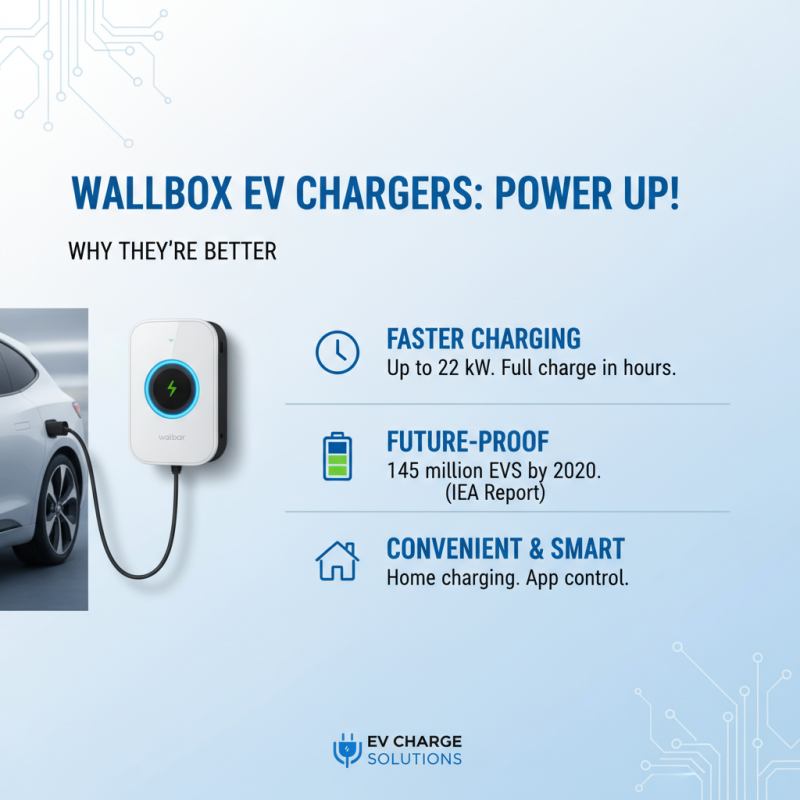
Wallbox chargers are rapidly becoming the preferred choice for electric vehicle (EV) owners, and for good reason. According to a report by the International Energy Agency (IEA), the number of EVs on the road is expected to reach 145 million by 2030, highlighting the growing need for efficient charging solutions. One of the significant benefits of wallbox chargers is their ability to provide faster charging times compared to standard outlets. Many wallbox models can deliver up to 22 kW, enabling a full charge in just a few hours, which is crucial for users who rely on their vehicles daily.
Additionally, wallbox chargers offer convenience and enhanced control over the charging process. With features such as scheduled charging and energy monitoring, users can optimize their electricity consumption and reduce costs. A study by the Electric Vehicle Association indicates that home charging can cost up to 80% less than using public charging stations. As a result, wallbox chargers not only enhance the overall user experience but also contribute significantly to cost savings. The combination of speed, convenience, and lower operational costs makes wallbox chargers an ideal choice for EV owners looking to maximize their charging efficiency.
Comparative Charging Times: Wallbox vs. Standard Outlet Chargers
When choosing a charger for electric vehicles (EVs), it's crucial to consider the
charging times offered by different options. A
Wallbox charger
significantly outperforms standard outlet chargers in this aspect. For instance, while a
typical Level 1 home outlet may provide about 4-5 miles
of range per hour of charging, a Wallbox charger can deliver upwards of
25 miles of range per hour, depending on the
specific model and the vehicle's battery capacity. This enhanced charging speed translates
to significantly reduced downtime, making it a more efficient choice for daily utilizations.
Industry reports indicate that an increasing number of EV owners are opting for Wallbox chargers
due to their faster charging capabilities. According to
the U.S. Department of Energy, the average time spent
charging at home has dropped considerably with the introduction of Level 2 chargers, which
are more reflective of Wallbox technology. With the growing adoption of electric vehicles projected
to reach nearly 20% of total vehicle sales by 2025,
the demand for faster and more efficient charging solutions
will continue to rise. Thus, investing in a Wallbox charger not only supports a more convenient
charging experience but also aligns with the broader shift towards sustainable transportation.
Cost Efficiency: Evaluating the Return on Investment in Wallbox Chargers
When considering electric vehicle (EV) charging solutions, cost efficiency plays a critical role in the decision-making process. Wallbox chargers, known for their high performance and easy installation, offer an appealing return on investment (ROI) for both homeowners and businesses. According to a report by the International Energy Agency (IEA), the average cost of a Level 2 home charger installation ranges from $400 to $2,200, but the savings in energy costs over time can offset this initial expenditure. Many users report reduced electricity rates during off-peak hours, leading to potential savings of approximately $200-$300 annually depending on local utility rates.
Furthermore, the value of installing a Wallbox charger extends beyond mere cost savings. According to a study by the National Renewable Energy Laboratory, the installation of home EV chargers can increase property values by $3,000 to $5,000. This appreciation is particularly significant amidst growing consumer demand for electric vehicles, supporting the case for homeowners to invest in wallbox charging solutions. As the EV market continues to expand, individuals and companies alike recognize that the integration of efficient charging infrastructure not only enhances convenience but also serves as a strategic financial decision in a rapidly evolving automotive landscape.
Cost Efficiency: Evaluating the Return on Investment in Wallbox Chargers
Safety Features: How Wallbox Chargers Protect Your EV and Home
When it comes to charging your electric vehicle (EV) at home, safety should be a top priority. Wallbox chargers are specifically designed with an array of safety features that protect both your vehicle and your home. One significant advantage of these chargers is their built-in surge protection, which prevents any unexpected voltage spikes from damaging your EV's battery or the charger itself. This feature ensures that your charging sessions are not only efficient but also secure, providing peace of mind while you recharge your vehicle.
Additionally, many wallbox chargers incorporate ground fault protection, which senses any electrical anomalies and immediately cuts off power to prevent accidents. This is particularly important in home environments where moisture and conductive surfaces may pose a risk. Such measures significantly reduce the chances of electrical hazards, ensuring that your charging experience is safe for both your family and your property. With these advanced safety features, wallbox chargers are a reliable choice for any EV owner looking to enhance their home charging setup.
Why Choose a Wallbox Charger for Your Electric Vehicle Charging Needs?
| Feature |
Description |
Benefit |
| Overcurrent Protection |
Automatically cuts power if excessive current is detected. |
Prevents damage to the vehicle and charger. |
| Surge Protection |
Protects against voltage spikes from power surges. |
Safeguards your EV and residential electrical systems. |
| Temperature Monitoring |
Monitors charger's temperature during operation. |
Ensures safe charging by preventing overheating. |
| Cable Locking Mechanism |
Locks charging cable in place when not in use. |
Prevents theft and unauthorized use. |
| Ground Fault Detection |
Detects ground faults and discontinues charging. |
Protects users from electric shock hazards. |
| User Friendly Interface |
Intuitive controls and indicators. |
Enhances user experience during charging. |
Installation Considerations: Key Factors for Installing a Wallbox Charger
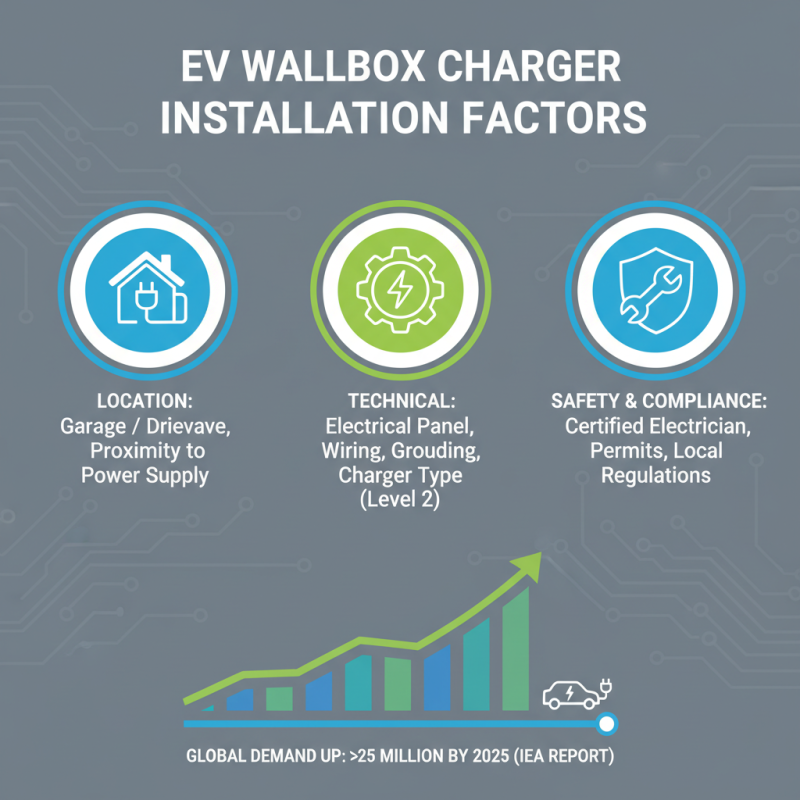
When considering the installation of a Wallbox charger for electric vehicle (EV) charging needs, various installation factors come into play to ensure an efficient and safe charging experience. According to a report from the International Energy Agency, the demand for home EV chargers is expected to rise significantly, with projections suggesting over 25 million installations by 2025. This surge underscores the importance of choosing the right location and understanding the technical requirements for installation.
One key consideration for installing a Wallbox charger includes the electrical capacity of the home. Electric vehicles often require a dedicated circuit, and assessing whether the existing household electrical system can handle the additional load is crucial. Industry data indicates that most home charging solutions operate on a 240V circuit, often requiring a 40-50 amp breaker. Homeowners should consult a licensed electrician to evaluate wiring, panel capacity, and potential upgrades to prevent overloading the electrical system.
Another important factor involves installation location. The Wallbox charger should be conveniently situated to optimize access for the vehicle while also considering clearances from obstacles, aesthetics, and potential weather exposure. Furthermore, local electrical codes and regulations may influence the installation process, making it essential to stay informed about guidelines that ensure safety and compliance. Prioritizing these considerations can significantly enhance the effectiveness and safety of charging electric vehicles at home.





 Phone
Phone Send Email
 whatsapp
 Facebook
 Youtube