How to Choose the Right AC Charging Pile?
Choosing an Ac Charging Pile is not just a matter of selecting the highest power rating. It means matching charging speed, electrical capacity, vehicle compatibility, and daily usage. The International Energy Agency’s Global EV Outlook 2024 reported more than four million public charging points worldwide by the end of 2023. Public fast chargers grew by about 55% that year, while slower chargers remained an important part of the network. The figures show a broad market, but they do not tell every buyer what to install.
Start with the vehicle’s onboard AC charger, since it limits how quickly the battery can receive power. Then consider available supply, installation conditions, and how long vehicles usually stay parked. The U.S. Department of Energy’s Alternative Fuels Data Center describes Level 2 charging equipment as operating at 208 or 240 volts, with power commonly ranging from 2.9 to 19.2 kW. Actual charging speed depends on the vehicle and site. Small details matter: a long cable can reach a driveway, while a poorly placed unit may turn every connection into a hassle. Safety protections, connector fit, weather resistance, and service support deserve equal attention. No single specification settles it. A higher-rated charger can be unnecessary where vehicles remain parked overnight, and site limits can change the calculation. This guide explains how to compare practical options and choose an AC charger that fits real operating needs—not just a brochure.
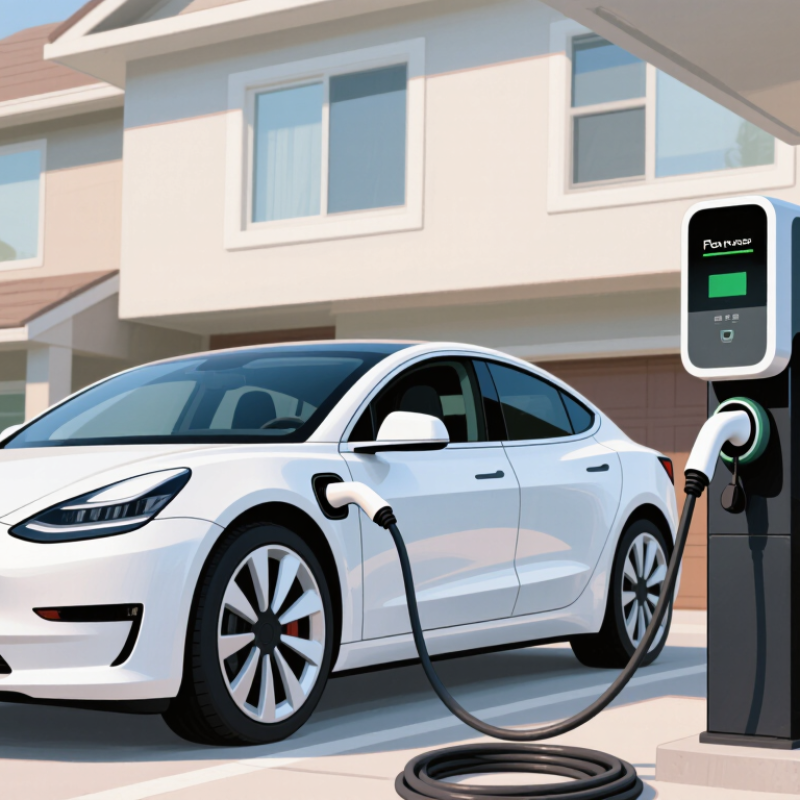
Assess Charging Needs: Compare 3.7–22 kW AC Charger Ratings with Daily Use
How to Choose the Right AC Charging Pile?
Assess Charging Needs: Compare 3.7–22 kW AC Charger Ratings with Daily Use
Choose an AC charger by matching its power rating to your driving routine and your vehicle’s limits. A 3.7 kW charger adds roughly 3.7 kWh per hour before charging losses; an 11 kW unit adds more, if your car supports it. For example, eight hours at 3.7 kW can provide about 30 kWh before losses. That may cover many daily commutes. Check your vehicle manual for its maximum AC charging rate.
Tips: Track your usual distance for a week. Estimate energy use from your car’s stated consumption, then allow for charging losses. Check your home’s electrical supply with a qualified electrician. A 22 kW charger may need a compatible vehicle and three-phase power.
It is tempting to buy the highest rating, but unused capacity may add cost without shortening your charging session. Your car’s onboard charger sets a practical ceiling: a vehicle limited to 7.4 kW will not charge faster from a 22 kW AC unit. Consider when the car is parked, too. If it sits overnight, lower power may be enough; if it returns late and leaves early, faster charging could matter. Actual results vary with temperature, battery state, and installation conditions, so treat estimates as a planning guide, not a promise.
Match Connector and Supply: Type 2, 230 V Single-Phase, and 400 V Three-Phase
How to Choose the Right AC Charging Pile?
Start with the connector your car accepts. Type 2 is common for AC charging in many regions, but confirm your vehicle’s inlet and the charger’s socket or attached cable. A plug that looks close is not enough. Check the exact connector specification in the vehicle manual. Small details matter.
Next, match the supply to the car’s onboard charger and the site wiring. A 230 V single-phase supply at 32 A can provide about 7.4 kW, before losses. A 400 V three-phase supply can deliver more: roughly 11 kW at 16 A or 22 kW at 32 A, when the installation and vehicle support it. The charger cannot make a single-phase car accept three-phase power. Nor should a higher rating be treated as a promise of faster charging.
A common oversight is focusing only on the pile’s maximum output. Check the circuit capacity, cable rating, and available phase supply with a qualified installer. In practice, a driveway may have only single-phase power, while a workplace can offer three phases. I would not assume either setup from the building’s age or appearance; verify it. The right match is the one your car and electrical supply can both use safely.
How to Choose the Right AC Charging Pile? — Match Connector and Supply: Type 2, 230 V Single-Phase, and 400 V Three-Phase
| Charging Setup |
Typical AC Supply |
Approximate Maximum Power |
Connector and Cable |
Best Suited To |
Check Before Choosing |
| Single-phase, 16 A |
230 V, single-phase |
About 3.7 kW |
Type 2, where supported by the vehicle and charging equipment |
Overnight home charging and vehicles with a lower AC charging limit |
Confirm the circuit, protective devices, and vehicle onboard charger support the intended current. |
| Single-phase, 32 A |
230 V, single-phase |
About 7.4 kW |
Type 2; the cable and charging point must be rated for the current |
Homes with a suitable single-phase connection and vehicles that accept higher single-phase AC power |
Check the available supply capacity and local installation requirements. The vehicle may charge at a lower rate. |
| Three-phase, 16 A |
400 V, three-phase |
About 11 kW |
Type 2 with three-phase wiring and a suitably rated cable |
Homes or workplaces with three-phase supply and vehicles equipped for three-phase AC charging |
Verify that the vehicle’s onboard charger accepts three-phase power; some vehicles use only one phase. |
| Three-phase, 32 A |
400 V, three-phase |
About 22 kW |
Type 2 with three-phase wiring and equipment rated for 32 A per phase |
Sites with adequate electrical capacity and vehicles whose onboard chargers support up to 22 kW AC |
Many vehicles have a lower AC charging limit, so a 22 kW charging point will not guarantee 22 kW charging. |
| Single-phase vehicle on a three-phase site |
400 V, three-phase supply; charging may use one phase |
Limited by the vehicle, phase current, and installation |
Type 2, subject to vehicle and charging-point compatibility |
Installations intended to serve a mix of vehicle types |
Confirm how the charging point allocates phases and whether the vehicle can use the available connection. |
Selection rule: Choose a Type 2 charging point that matches the vehicle inlet, the available supply, and the installation rating. Actual charging power is limited by the lowest-rated component, including the supply, charging point, cable, and vehicle onboard charger. Approximate power figures use nominal voltage: 230 V × current for single-phase, and √3 × 400 V × current for three-phase.
Size Charger and Circuit: 7.4 kW ≈ 32 A; 11 kW ≈ 16 A per phase
How to Choose the Right AC Charging Pile?
Size the charger and circuit together. At 230 V single-phase, 7.4 kW draws about 32 A. An 11 kW unit usually uses three-phase power at 400 V, drawing about 16 A per phase. These are nominal figures, not a final circuit design. The European Commission’s Alternative Fuels Observatory tracks charging infrastructure across Europe, while the IEA’s Global EV Outlook 2024 reports roughly 40% growth in public charging points during 2023. But a home connection is personal. Check the vehicle’s onboard charger, supply type, and available capacity before choosing.
That difference matters. A 32 A single-phase charger may need a dedicated circuit with suitable cable and protective devices. An 11 kW charger needs three-phase service; a property without it cannot deliver that rate just by installing a larger unit. Cable length, installation conditions, and other household loads can also affect the design. Ask a qualified electrician to check the supply and size the circuit under applicable local standards. A tidy calculation can still mislead. I’d leave headroom where practical, though the right margin depends on the site—not a generic rule. And check the car’s limit, too. A charger’s rating does not guarantee the vehicle will accept its full output.
Check Safety and Smart Features: IEC 61851-1 and 6 mA DC Fault Detection
When choosing an AC charging pile, look beyond its connector and charging speed. Check whether the equipment is designed to meet IEC 61851-1, which sets general requirements for conductive EV charging systems. A standards reference is useful, but it is not proof that every installation will be safe. Ask for clear product documentation and have a qualified electrician assess the circuit.
Pay close attention to 6 mA DC fault detection. During a fault, smooth DC leakage can affect the operation of some upstream residual-current protection devices. Detection built into the charger can help address this risk, but confirm what protection is included and what additional devices the installation requires. The details matter. A vague label is not enough.
Smart functions should support safe, practical charging. Dynamic load management can reduce the chance of exceeding a home’s available electrical capacity when an oven or heater is running. Scheduling can shift charging to a convenient time, while an app may show charging status and fault alerts. Check that alerts are understandable and that basic charging remains possible if the internet drops. I would not choose a unit for a long feature list alone; some features sound better on a screen than they feel in daily use. Have the installer verify protection, wiring, and settings for your specific site.
How to Choose the Right AC Charging Pile: Safety and Smart Features
Illustrative residual-current protection values commonly referenced for AC EV charging installations.
A 6 mA DC detection function is associated with RDC-DD requirements in IEC 62955; 30 mA is a commonly used AC RCD rating. These values describe different types of residual current protection and are not directly equivalent. IEC 61851-1 covers general EV supply equipment requirements; verify the applicable installation rules and equipment documentation.
Evaluate Installation Requirements: 22 kW Charging Typically Requires Three-Phase Power
Start with the electrical supply, not the charger’s headline rating.
A 22 kW AC charger commonly needs a 400 V three-phase circuit at about 32 A per phase. Confirm the unit’s exact specification, since voltage and installation standards vary by region. By comparison, 230 V single-phase at 32 A delivers roughly 7.4 kW. That difference is easy to miss. Ask a qualified electrician to check service capacity, protective devices, cable routing, and other major loads before purchase. An upgraded connection may be necessary.
The IEA’s Global EV Outlook 2024 reports that public charging points grew by more than 40% in 2023, reaching about 3.5 million worldwide. This signals expanding charging access, but it does not show whether a home supply can support 22 kW. Check the vehicle’s onboard AC charging limit, too. A 22 kW charger cannot make a car accept 22 kW. A tidy calculation can still mislead.
Request a site assessment that accounts for peak household demand, utility limits, and cable length. Long cable runs may require thicker conductors. Consider what happens when the oven, water heater, and charger operate together. Dynamic load management can help control peak demand, but it cannot provide three-phase power where none exists. Measurements matter.



 Phone
 Send Email
 whatsapp
 Facebook
 Youtube