| 1 |
Confirm the available electrical capacity |
Under NEC continuous-load rules, an EV charging load is generally calculated at 125% of its maximum continuous current. A 32 A charger is calculated as 40 A; a 40 A charger as 50 A; a 48 A charger as 60 A. |
Review the service rating, panel rating, existing loads, and feeder capacity. Use a qualified electrician for the formal load calculation before selecting charger output. |
| 2 |
Match charger current to the circuit |
Typical continuous EV charging circuit examples are 24 A on a 30 A circuit, 32 A on a 40 A circuit, 40 A on a 50 A circuit, and 48 A on a 60 A circuit, subject to the applicable installation rules and equipment ratings. |
The charger should be configured so its maximum continuous output does not exceed the circuit’s permitted continuous-load capacity. Do not increase breaker size without confirming conductor and equipment ratings. |
| 3 |
Check voltage and phase compatibility |
Many residential Level 2 chargers use a nominal 208/240 V single-phase supply, while some properties may have different service arrangements. Actual voltage must be confirmed at the installation point. |
Verify the charger’s input-voltage range, number of conductors, grounding method, and supply configuration before purchase. |
| 4 |
Choose the appropriate charging speed |
Approximate power at 240 V is 5.8 kW at 24 A, 7.7 kW at 32 A, 9.6 kW at 40 A, and 11.5 kW at 48 A, calculated with the formula: power = voltage × current. |
Select the highest practical output that the vehicle, circuit, service, and daily driving pattern can support. A higher-rated charger does not make a vehicle charge faster than its onboard charging limit. |
| 5 |
Use outdoor-rated equipment |
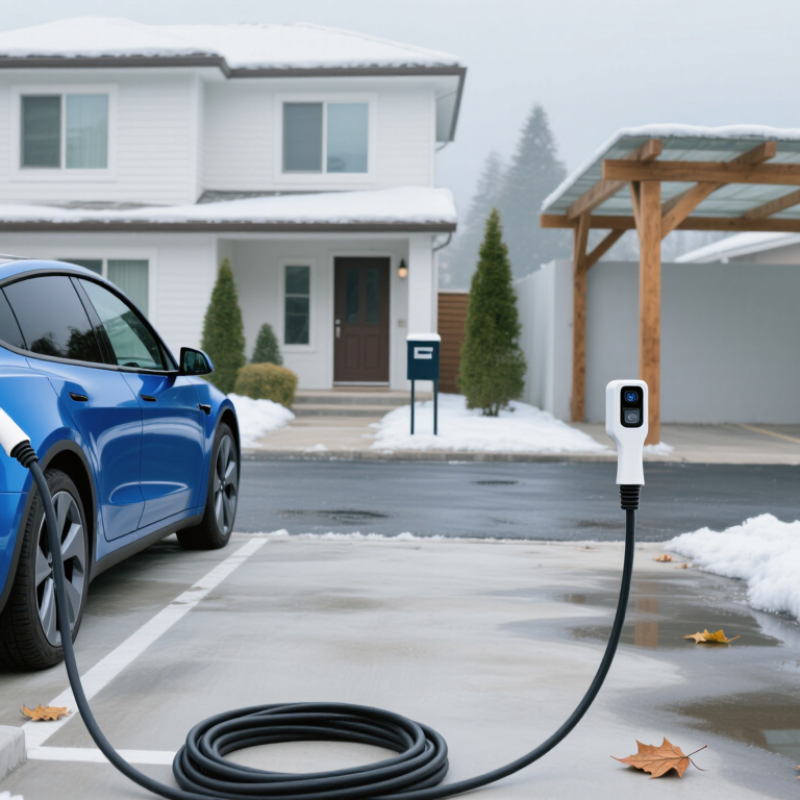
Outdoor installations require equipment, enclosures, fittings, and wiring methods that are listed and suitable for exposure to weather, moisture, temperature changes, and sunlight. |
Look for clearly stated outdoor suitability, weather-resistant construction, protected cable routing, and installation instructions that specify permitted mounting and operating conditions. |
| 6 |
Verify ground-fault protection |
EV charging equipment commonly requires ground-fault protection, and the applicable NEC provisions can depend on the equipment type and installation method. Some equipment provides personnel protection internally. |
Confirm whether protection is provided by the circuit breaker, the charging equipment, or both, and follow the current local code and installation instructions. |
| 7 |
Select the correct wiring method |
Conductor ampacity depends on conductor material, insulation rating, temperature, number of current-carrying conductors, termination ratings, installation method, and required adjustments. |
Do not choose wire size from amperage alone. Account for distance and voltage drop where appropriate, and use wiring listed for the location and environmental conditions. |
| 8 |
Plan the disconnect and accessibility |
A disconnecting means may be required depending on the equipment location, circuit arrangement, and adopted electrical code. Requirements vary by jurisdiction and installation design. |
Keep required disconnects accessible, clearly identified, and protected from accidental damage. Confirm the exact location and rating with the installer or local authority. |
| 9 |
Evaluate mounting and cable placement |
Charging equipment should be mounted securely, with cable routing that avoids trip hazards, vehicle impact zones, sharp edges, standing water, and excessive bending. |
Choose a location close enough for the vehicle inlet while maintaining clearance from driveways, pedestrian paths, sprinklers, snow accumulation, and areas subject to physical impact. |
| 10 |
Confirm permits, inspection, and future capacity |
Permit, inspection, and utility requirements differ by location. Future electrical demand can also affect whether a service upgrade or load-management approach is appropriate. |
Confirm local requirements before work begins. If adding another EV, heat pump, electric range, or solar equipment later, include that expected demand in the planning process. |


 Phone
 Send Email
 whatsapp
 Facebook
 Youtube