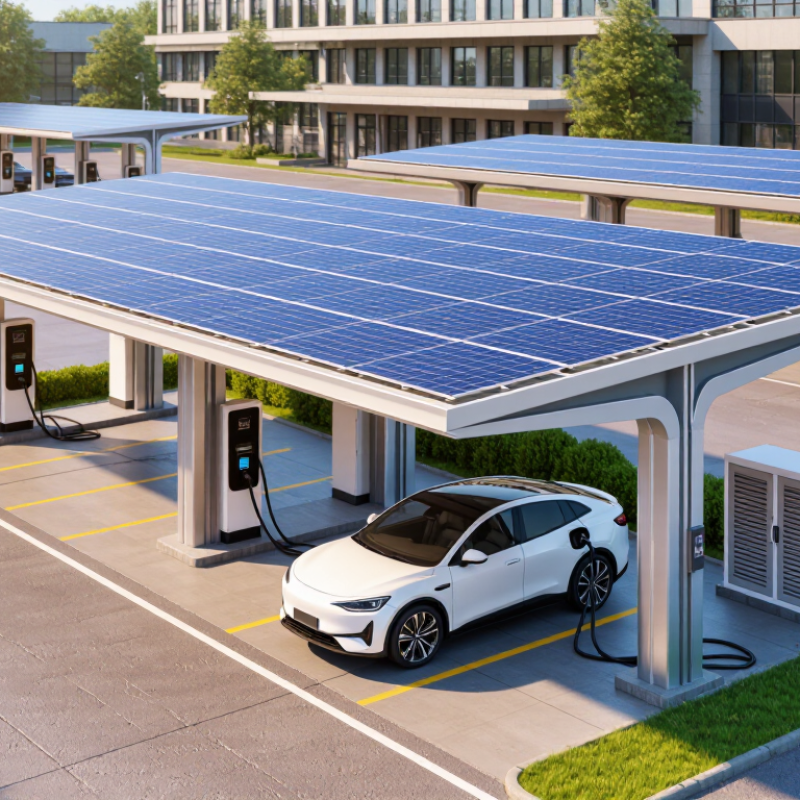
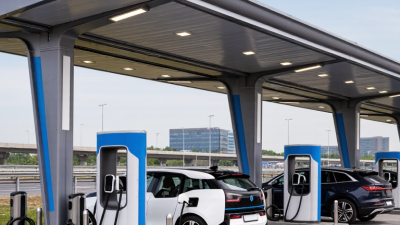
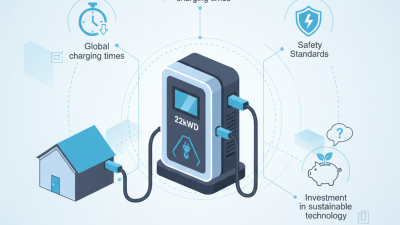
The 2026 market for solar-powered electric vehicle charging is becoming more practical, diverse, and demanding. Global buyers now seek reliable charging equipment, not attractive specifications alone. A Solar Powered Ev Charging Station can combine photovoltaic panels, an inverter, battery storage, and an EV charger. Each component affects charging speed, safety, and total ownership cost.
This guide examines leading solar charging solutions for homes, workplaces, hotels, farms, and public parking areas. It considers output power, battery capacity, solar efficiency, weather resistance, installation requirements, and remote monitoring. Cable length matters. So does shade. A charger may promise fast charging, yet perform poorly beneath clouds or during winter months. Real-world energy production depends on location, roof angle, temperature, and daily driving patterns.
Buyer experience should remain central. Installers must verify electrical capacity, grounding, protection systems, and local connection requirements before deployment. Product certifications and manufacturer support also deserve careful review. These details often reveal more than marketing language. Pricing can be misleading. A lower purchase cost may hide complex installation or expensive battery replacement.
No single charger suits every country or driver. That is worth remembering. Some recommendations may change as charging standards, incentives, and battery technologies develop. Even respected brands can have limitations. Therefore, this overview compares practical strengths and weaknesses instead of presenting one universal winner. The goal is to help international buyers choose a safer, more efficient, and more realistic solar charging solution for 2026.
A solar-powered EV charger uses electricity generated by rooftop or ground-mounted solar panels. The panels produce direct current, while most home charging systems deliver alternating current to the vehicle. An inverter converts the power between these forms. Some systems also include a battery, which stores midday solar energy for evening charging.
When sunlight is strong, smart controls can send surplus power to the car. If clouds pass, charging may slow or pause. A grid connection can provide backup when solar output falls. This setup reduces dependence on conventional electricity, but it does not create free energy. Panel size, weather, roof direction, and vehicle battery capacity all affect results. A realistic system may charge slowly during winter. That limitation is easy to underestimate.
Tips:
Check the charger’s voltage, connector, protection rating, and regional certification. Ask an accredited electrician to inspect wiring and grounding. Review real production data, not only peak-power claims. A home energy monitor can show whether charging uses solar power or the grid. Leave space for future battery storage. Perfect solar charging is rarely practical. Planning for mixed energy sources is wiser.
The best solar-powered EV chargers in 2026 combine clean generation with dependable charging control. The IEA’s Global EV Outlook 2025 reported more than 17 million electric car sales in 2024. Meanwhile, IRENA recorded about 1,865 GW of global solar capacity by the end of 2024. These figures support stronger demand for chargers that manage sunlight, household loads, and grid power without confusing users.
A high-quality unit should include maximum power point tracking, real-time solar monitoring, and automatic source switching. Dynamic load balancing prevents charging from overloading a home’s main connection. Battery storage can keep charging stable after clouds pass. That feature matters in regions with fast weather changes. Certified residual-current protection, temperature monitoring, and secure cable locking are essential safety details. Outdoor buyers should look for suitable ingress protection and wide operating-temperature ranges. A clear mobile interface helps users see solar input, charging power, and daily energy costs.
Interoperability also matters. Support for open communication protocols can simplify use across different energy systems. The IEA notes that smart charging can reduce peak demand and improve grid flexibility. However, solar output changes by season, roof direction, and local shading. No charger removes those limits. A system may promise high annual solar coverage, yet winter performance can disappoint. Buyers should check measured efficiency, warranty terms, installation records, and independent safety certification. These details often reveal more than attractive peak-power figures.
Comparing solar EV chargers starts with the market, not the product brochure. The IEA’s Global EV Outlook 2024 reported more than 14 million electric car sales in 2023. It also projected around 17 million sales in 2024. Demand is rising, but local charging conditions remain uneven.
Check solar yield before checking charging speed. IEA PVPS Trends 2024 reported global solar capacity above 1.4 terawatts at the end of 2023. That figure does not guarantee strong output at every site. A northern European home may need a larger array, grid support, and winter scheduling. A sunny commercial site may prioritize thermal control and midday fleet charging. Ask for measured annual irradiance, not only peak sunlight claims.
Grid rules matter.
Compare connector requirements, phase configuration, voltage ranges, and export limits for each country. In markets with unstable grids, confirm whether the charger supports safe load management and battery backup integration. In high-tariff regions, compare solar self-consumption against exported electricity values. The best charger is not always the fastest one. A lower-power unit may deliver more useful solar energy when the vehicle sits for eight hours.
The International Electrotechnical Commission’s safety standards should guide protection, enclosure ratings, and installation testing. Request independent certification and clear warranty conditions. Some specifications still hide cable losses, standby consumption, or cold-weather limits. That deserves skepticism. Buyers should compare one full year of estimated energy, maintenance, and replacement costs, although those estimates will never be perfectly precise.
Choosing a solar-powered EV charger in 2026 requires more than comparing charging speed. Installation conditions often determine real performance. A roof-mounted array needs clear sunlight, safe cable routes, and enough structural capacity. Ground-mounted panels may work better where roofs are shaded. Check local electrical rules before equipment arrives. Do not skip this step.
A qualified electrician should assess the service panel, earthing, protection devices, and available connection capacity. A home charger may need dynamic load management when cooking, heating, and charging happen together. Commercial sites require a clearer demand study. Smart controls can reduce peak imports and respond to time-based tariffs. However, software settings are not a substitute for correct wiring. In practice, installation schedules often underestimate trenching and network approval delays.
Energy storage can improve solar use after sunset and provide limited charging during grid interruptions. Battery size should match driving patterns, solar output, and backup priorities. A 10 kWh battery behaves differently in winter than in summer. Oversizing may increase cost without improving daily value. Some systems can charge the vehicle directly from solar, while others route energy through the battery first. That distinction affects efficiency and battery wear. Grid-connected systems should include certified protection and anti-islanding functions. Results will vary. Weather, tariffs, and household demand remain difficult to predict, so buyers should request measured performance data, clear warranties, and a commissioning report rather than relying on optimistic estimates.
2026 Top Solar Powered EV Chargers for Global Buyers
Solar-powered EV chargers can reduce grid dependence, but safety must lead every buying decision. Choose equipment with recognized electrical certification for the destination market. Check voltage, frequency, connector type, and maximum charging current before ordering. A mismatch can damage the vehicle or household wiring. Protection against overcurrent, overheating, ground faults, and surges is essential. Outdoor units should also have a suitable weather-resistance rating. Moisture around a loose cable can become a serious hazard.
Maintenance is practical, not complicated. Keep panels free from dust, leaves, and bird droppings. Inspect cables for cuts, stiff sections, or exposed copper. Test emergency shutoff controls according to the installation guide. Review charging data each month. A sudden power drop may indicate shading, battery limits, or a loose connection. Real installations are rarely perfect. Even careful buyers can overlook local sunlight patterns.
Tips: Ask for installation instructions, warranty terms, spare-part availability, and service contacts in your region. Confirm whether the charger works with home energy storage and backup systems. Local electricians understand grounding rules and permit requirements better than online sellers. Avoid choosing only by charging speed. Faster is not always safer or more efficient. Global buyers should compare shipping conditions, import duties, language support, and local repair access before payment. Keep purchase records and inspection reports. They make future troubleshooting easier.
| Rank | Solar Charging Configuration | Typical PV Array Size | EV Charging Output | Energy Storage | Best Application | Safety and Electrical Requirements | Maintenance Profile | Global Buying Considerations |
|---|---|---|---|---|---|---|---|---|
| 1 |
Best Overall Grid-connected solar carport with smart load management |
Approximately 5–15 kWp Depends on roof area, local solar resource, and daily vehicle mileage |
3.6–22 kW AC Single-phase or three-phase operation |
Optional Usually 5–20 kWh for peak-shaving or evening charging |
Homes, workplaces, hotels, and small commercial sites with reliable grid access | Use a dedicated circuit, overcurrent protection, earthing, and residual-current protection. EV charging equipment should comply with applicable IEC 61851 or local equivalent requirements. Solar installation should follow local PV and electrical codes. | Inspect cables, plugs, enclosure seals, and protective devices every 6–12 months. Remove dirt from PV modules and check mounting hardware at least annually. | Confirm grid voltage, phase configuration, connector standard, import certification, utility export rules, and local electrician requirements before purchase. |
| 2 |
Best for Off-Grid Sites Solar PV, battery storage, and AC EV charger microgrid |
Approximately 8–25 kWp Sizing must account for charging demand, seasonal sunlight, and battery losses |
3.6–11 kW AC Lower output reduces inverter and battery requirements |
Approximately 20–80 kWh Capacity varies with autonomy targets and vehicle usage |
Remote homes, farms, construction sites, eco-lodges, and locations with weak or unavailable utility grids | Require coordinated protection between PV, battery, inverter, and charger. Include isolation devices, surge protection, ventilation where required, and a properly designed earthing system. | Monitor battery state of health, inverter alarms, thermal conditions, and ventilation. PV cleaning and electrical inspections are commonly required at least annually. | Evaluate local battery transport rules, ambient temperature range, replacement availability, after-sales service, and generator or grid backup compatibility. |
| 3 |
Best for Homeowners Solar-surplus wall-mounted AC charger |
Approximately 3–10 kWp Commonly matched to residential PV systems |
1.4–7.4 kW AC Dynamic current adjustment helps use surplus solar power |
Not required The vehicle charges when PV generation exceeds household demand |
Private residences where daytime solar generation is available and charging can be scheduled | A dedicated circuit and correctly rated protective devices are required. Minimum charging current and phase compatibility must be checked for the local supply. | Test the residual-current protection according to the manufacturer’s instructions. Inspect the connector, cable, display, and wall fixing periodically. | Check compatibility with the home energy meter, solar inverter communication method, Wi-Fi availability, local plug or socket type, and single-phase voltage. |
| 4 |
Best for High Daily Mileage Solar plus battery-buffered DC fast-charging system |
Approximately 30–150 kWp Larger arrays reduce grid demand but require substantial space |
Approximately 25–150 kW DC Actual output depends on vehicle voltage, battery temperature, and site power |
Approximately 50–500 kWh Used to reduce demand charges and support short high-power sessions |
Fleet depots, logistics facilities, highway rest areas, and commercial charging hubs | Requires engineered medium- or low-voltage distribution, high-power isolation, emergency shutdown, thermal monitoring, surge protection, and certified installation. DC charging equipment must meet applicable regional requirements. | Use scheduled preventive service for cooling systems, power modules, connectors, filters, fans, software, and battery systems. Professional inspection is normally required. | Confirm grid connection capacity, demand charges, connector protocol, payment system, communications, cybersecurity requirements, and local high-power charging approvals. |
| 5 |
Best for Fleets Solar depot charging with managed overnight scheduling |
Approximately 20–100 kWp Sized around fleet parking time and vehicle energy demand |
7–22 kW AC per charging point Multiple vehicles share available site power |
Optional A battery can reduce peak demand but is not essential where overnight grid supply is stable |
Delivery fleets, company vehicles, school transport, and municipal vehicle depots | Use load balancing, protective coordination, clear cable management, impact protection, and controlled access. Charging points should be installed by qualified personnel. | Inspect each charging point and cable on a planned schedule. Review charging logs, fault history, network connectivity, and emergency procedures. | Assess the number of vehicles, simultaneous charging behavior, fleet management software, data ownership, local labor rules, and spare-part availability. |
| 6 |
Best for Apartments Shared solar parking with individually metered AC chargers |
Approximately 10–50 kWp Dependent on shared roof or carport capacity |
3.6–11 kW AC per port Dynamic load management is strongly recommended |
Optional Usually added only when the site has peak-demand or backup-power needs |
Multi-family housing, condominiums, public-sector housing, and shared parking facilities | Require load allocation, user isolation, accessible emergency controls, weather-resistant enclosures, and clear responsibility for electrical inspections. | Inspect shared cables and sockets more frequently because of higher usage. Review meter accuracy, access controls, and fault reports. | Clarify ownership of the PV system, billing method, parking rights, tenant access, data privacy, and responsibility for upgrades to the building supply. |
| 7 |
Best for Flexible Installation Portable solar-battery EV charging package |
Approximately 1–5 kWp Often uses foldable or modular PV panels |
Approximately 1.4–3.6 kW AC Charging speed is limited by PV output and battery inverter capacity |
Approximately 2–15 kWh Provides charging continuity during short periods of cloud cover |
Temporary worksites, emergency response, outdoor events, and limited-use rural applications | Use only equipment rated for the intended environment. Protect cables from water, abrasion, vehicle movement, and unauthorized access. Follow battery handling and transport instructions. | Keep panels clean and dry, inspect portable connectors before each use, and store batteries within the specified temperature and state-of-charge limits. | Check shipping restrictions for lithium batteries, local plug adapters, inverter waveform, warranty coverage, weather rating, and replacement battery availability. |
| 8 |
Best for Low-Cost Entry Solar-aware AC charging point without dedicated battery storage |
Approximately 2–6 kWp Suitable for modest daily driving distances |
Approximately 1.4–7.4 kW AC Charging rate follows available solar power or a programmed schedule |
None Relies on direct solar generation or the electrical grid |
Small homes, holiday properties, and users who can charge slowly for several hours | Requires suitable circuit protection, reliable earthing, weather protection, and compatibility with the vehicle’s charging inlet and local supply voltage. | Clean PV modules as needed and inspect the charging cable, socket, and protective devices at least annually or as required by local regulations. | Confirm whether the charger can operate without cloud services, whether solar-only operation is supported, and whether the local electrical authority requires inspection or certification. |