Choosing a Portable Ev Charging Station is less about buying the largest number on the box and more about matching real charging needs. The International Energy Agency’s Global EV Outlook 2024 reported that public charging points worldwide exceeded four million in 2023, after growing by more than 40% that year. More chargers are appearing, but drivers still encounter gaps on rural routes, at rentals, and during busy travel periods. A portable unit can offer backup flexibility. It is not a replacement for every home or public charger.
IEA Executive Director Fatih Birol has said, “The future of road transport is electric, and the future is now.” That broader shift makes practical charging choices matter. Before buying, compare the unit’s output, connector compatibility, cable length, weight, and the power source it requires. Check the manufacturer’s safety documentation, too. A compact station may fit neatly in a trunk, yet deliver limited charging speed. That trade-off is easy to overlook.
Picture arriving at a cabin after dark, with a short cable and an unfamiliar outlet. Small details suddenly count. Look for clear setup instructions, temperature limits, and support from the seller. IEA data describes a fast-changing charging network, not a promise that every portable device will work everywhere. Product claims can be optimistic. Read the specifications carefully, and confirm compatibility with your vehicle and available power before relying on a unit for a long trip.
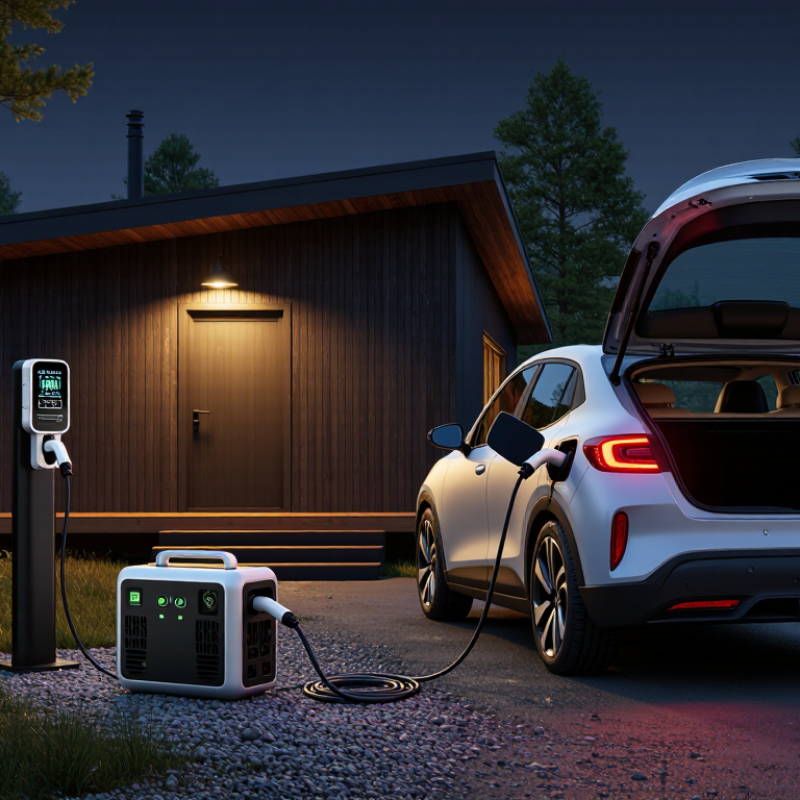
Choosing a portable EV charging station starts with your daily routine, not its maximum advertised output. Estimate how far you drive on ordinary days and how long your car usually sits parked. A 30-mile commute with overnight parking creates different needs from frequent short stops and limited home access. Note where charging is actually possible: a garage outlet, a workplace, or a regular overnight destination.
Check your vehicle’s connector and the outlet’s voltage and circuit capacity before comparing charging speeds. The car and available electrical supply both affect how quickly it can charge. Don’t assume an ordinary outlet can support long charging sessions; confirm its suitability and follow the equipment instructions. Small details matter. Measure the distance from the outlet to your parked car, and consider whether the cable is manageable to carry. A heavy unit may be less convenient than expected.
Your travel pattern also shapes what “portable” means. Drivers taking occasional rural trips may value compact storage and a cable that reaches varied parking spots. Those relying on overnight stays should check whether charging access is confirmed, rather than merely nearby. Real trips rarely follow a perfect spreadsheet. A week of notes can reveal more than one unusually busy day: record mileage, parking time, and missed charging opportunities. It is easy to overvalue speed and overlook whether the station fits your actual routine.
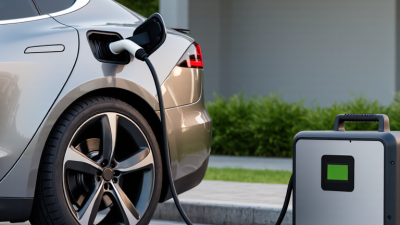
Before comparing charging speed or cable length, check the charging inlet on your vehicle. A portable charger must have a connector that matches the car’s port, or a suitable, manufacturer-approved adapter. Connector shapes and standards vary by vehicle and region. Check the owner’s manual or the label near the inlet rather than relying on a product photo. Small details matter.
Then confirm the charger’s power type and your vehicle’s limits. Most portable units provide AC power, which the car’s onboard charger converts for the battery. A unit’s maximum current does not guarantee that your car will charge at that rate. The vehicle, charging cable, and electrical outlet all affect the actual speed. Check the charger’s plug and current rating against the outlet and circuit you plan to use. A familiar household socket may look ready, but its wiring or circuit capacity may not be suitable for sustained charging.
I learned to check the inlet before packing a charger; once, I focused too much on cable length. Not ideal. Verify whether the connector locks securely, and whether an adapter is explicitly approved for that charging setup. Avoid improvised extensions or loose-fitting connections, which can overheat. If the manual is unclear, ask a qualified electrician or the vehicle maker’s support team before charging. A short compatibility check can prevent a frustrating arrival with a charger that simply will not connect.
| What to Check | Common Options or Facts | How to Confirm Compatibility | Practical Buying Guidance |
|---|---|---|---|
| Vehicle charging inlet | Common AC inlets include J1772 (Type 1) in North America and Japan, and Type 2 in many European markets. Some North American vehicles use the NACS connector, standardized as SAE J3400. | Check the vehicle manual or inspect the inlet. Match the station’s vehicle-side connector to the inlet, or use an appropriate, rated adapter if the vehicle and adapter manufacturers permit it. | Do not assume that a plug fitting physically means every charging function is supported; confirm the vehicle’s region, inlet, and permitted adapters. |
| AC versus DC charging | Most portable home and travel charging units are AC EV supply equipment (EVSE). The vehicle’s onboard charger converts AC power to DC for the battery. Portable DC charging equipment is a different, specialized category. | Check whether the product is an AC portable EVSE or a DC charger, and verify that the vehicle supports the stated charging method. | For a typical portable AC unit, compare its output with the vehicle’s maximum AC charging rate; the lower limit determines the actual charging rate. |
| DC fast-charge connector | CCS1 combines a J1772-style upper section with two DC contacts; CCS2 combines a Type 2 upper section with two DC contacts. CHAdeMO is another DC fast-charging standard used by some vehicles. | Check the vehicle’s DC inlet and the charger specifications. A portable AC EVSE does not provide DC fast charging just because an adapter is available. | Include this check if DC fast charging is a requirement. Connector compatibility alone does not guarantee that a particular charger or vehicle supports the same charging protocol. |
| Supply plug and electrical outlet | Portable EVSEs may connect to different household or higher-power outlets, depending on the model and market. Outlet types, voltage, and wiring practices vary by country. | Confirm the outlet type, supply voltage, circuit rating, and the EVSE’s approved input configuration. Have a qualified electrician assess uncertain or permanent installations. | Never use an improvised or unapproved adapter, extension lead, or outlet arrangement. The supply circuit must be suitable for the EVSE’s stated current. |
| Voltage, current, and charging rate | Charging power depends on the available supply, EVSE current setting, and vehicle onboard-charger limit. For single-phase AC, approximate power in kilowatts is voltage × current ÷ 1,000. | Compare the EVSE’s input and output ratings with the vehicle manual and the circuit rating. Check whether current can be set to a lower value for a suitable circuit. | A higher-rated EVSE cannot make a vehicle charge faster than its onboard charger or the available electrical supply allows. |
| Connector and cable rating | Connectors and cables have specified current limits and operating conditions. A complete charging setup is limited by its lowest-rated component. | Review the EVSE label and technical documentation for rated current, voltage, temperature range, and any required protection features. | Choose a unit with ratings suitable for the intended outlet and environment; do not exceed the limits of the vehicle, EVSE, connector, or circuit. |
| Adapter requirements | Adapters can address some connector differences, but their permitted use depends on the vehicle, EVSE, adapter rating, and charging direction. | Verify the exact adapter type and compatibility in documentation for the vehicle and charging equipment. Confirm that its electrical rating meets the intended use. | A connector adapter does not convert AC to DC, change the vehicle’s charging capability, or ensure compatibility with every charging protocol. |
| Weather and portability | Portable EVSEs vary in ingress protection, temperature limits, cable length, weight, and storage design. Ratings apply only under the conditions specified by the manufacturer. | Check the product’s environmental rating and operating instructions for outdoor use, storage, and handling of connectors and cables. | Choose a cable length and protection level suited to the parking location, and keep connectors clean, dry, and undamaged as directed. |
When comparing portable EV charging stations, look beyond the advertised maximum. Charging power depends on voltage and current: a 240-volt supply at 16 amps provides about 3.8 kW before losses. A 120-volt outlet may deliver much less. Your vehicle’s onboard charger can also cap the rate. A higher-rated unit will not make every car charge faster.
Check the electrical limits where you actually plan to plug in. Read the outlet and circuit ratings, then compare them with the station’s current setting and cable rating. Continuous charging can place a steady load on wiring, so a suitable outlet matters. Check the vehicle and equipment manuals, and ask a qualified electrician if the circuit’s capacity is unclear. Do not assume an adapter increases what the circuit can safely supply. Small detail, big difference.
Think about practical charging speed, too. If your daily drive uses 20 kWh, a station delivering 3 kW may replace that energy in roughly seven hours, allowing for losses. That may be enough overnight. It may not be enough during a short stop. I would compare adjustable current settings, plug compatibility, and cable length alongside peak power. A longer cable sounds convenient, but it can be awkward to store. Real use is messier than a product chart.
Evaluate Portability, Safety Features, and Build Quality
Portability is more than a low number on the spec sheet. Check the charger’s weight, cable length, storage case, and plug compatibility. A long cable can reach a driveway outlet, but it also adds bulk in a small trunk.
The U.S. Department of Energy’s Alternative Fuels Data Center lists typical charging rates of 2–5 miles per hour for Level 1 and 10–20 for Level 2.
Match the unit to your outlet and daily driving needs; faster charging requires a suitable power supply.
Safety details deserve a close look. Seek a recognized independent safety certification, plus ground-fault protection, overcurrent safeguards, and temperature monitoring. IEC 62752 covers in-cable control and protection devices for Mode 2 charging.
Check the manual for operating limits, including whether outdoor use is permitted. The cable should resist kinks, and its connector should fit snugly without excessive force.
Small details matter.
Build quality shows up after repeated handling. Inspect the strain relief where the cable meets the control box, the latch on the connector, and the case seams. Weight matters. An overly light unit may be convenient, but materials and construction still need scrutiny.
The IEA’s Global EV Outlook 2024 reported that public charging points grew by over 40% in 2023.
That expansion is useful, though it cannot guarantee a reliable charger at every stop. Before buying, compare warranty terms and replacement-cable availability; these are easy to overlook.
When comparing a portable EV charging station, calculate the full cost, not just the sticker price. The U.S. Department of Energy’s Alternative Fuels Data Center lists a broad Level 2 equipment-cost range of about $400–$6,500, before installation. Treat this as a market benchmark, not a portable-unit price quote. Compare charging current, cable length, and included adapters. A longer cable can ease awkward parking, but it adds weight. Check warranty duration, claim steps, and whether the cable, plug, and display are covered. A short warranty may seem acceptable until a fault appears in cold weather.
The IEA’s Global EV Outlook 2024 reported that public charging points grew by more than 40% worldwide in 2023. Yet fast growth does not guarantee a convenient charger near your route. Useful accessories include a secure cable hook, a weather-rated storage bag, and only compatible, approved adapters. Extra accessories can help, though they should not replace checking the station’s safety instructions.
Tips: Get exclusions in writing. Confirm outlet compatibility. Keep receipts. Small details matter. Before buying, check that the warranty applies to your intended indoor or outdoor use. A bargain may still be the wrong fit.