Leave Your Message

How to Choose EV Chargers for Business in 2026?

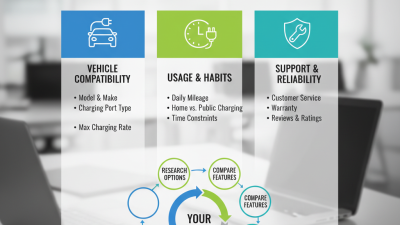
Choosing EV Chargers for Business in 2026 is a practical investment decision, not a race to install the highest-powered equipment. A charger must fit how people actually use your site. Think of employees arriving at 8 a.m., delivery vehicles returning after lunch, and customers needing a quick top-up. Those patterns shape charger count, power levels, and payment options. Small details matter.

EV charging reviewer Tom Moloughney, known for his State of Charge reviews, offers a useful reminder: “Reliable charging matters more than impressive specifications.” Treat that as a decision principle, not a substitute for site data. Before comparing hardware, review parking duration, electrical capacity, expected demand, and maintenance support. A charger that looks impressive on paper may sit idle if its location is awkward or its network experience frustrates drivers.

This guide explains how to compare charger types, installation needs, software, costs, and future expansion. It also considers accessibility, clear pricing, and dependable support. These factors can affect daily operations as much as charging speed. The numbers may not line up neatly. Real usage often surprises operators, and forecasts deserve a second look. For businesses planning an installation in 2026, careful choices can make charging more useful today and easier to scale tomorrow.
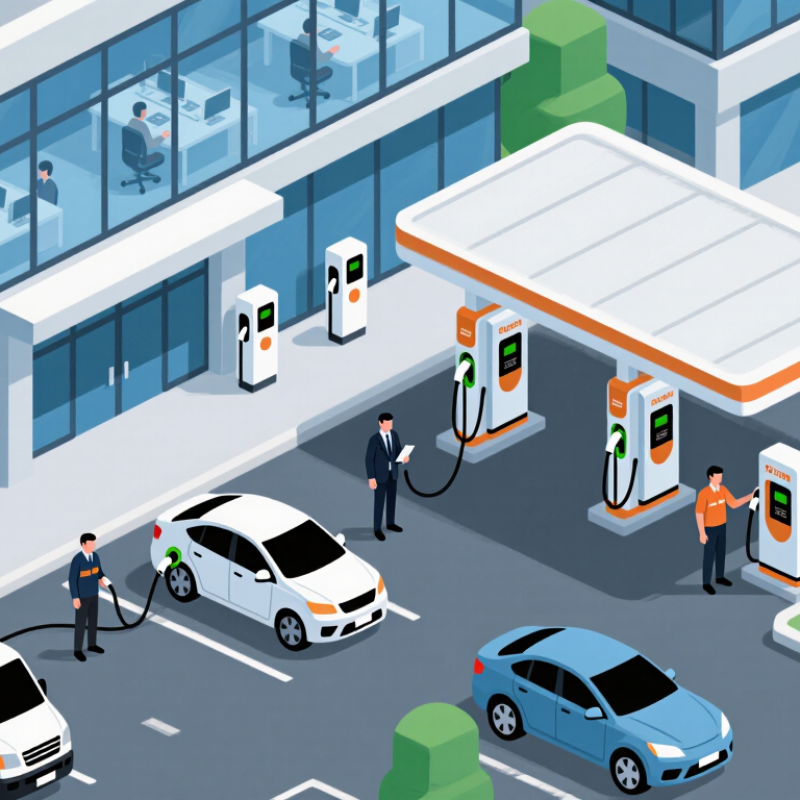
How to Choose EV Chargers for Business in 2026?

Define Your Business’s EV Charging Needs and Usage Patterns

Before choosing EV chargers, map how vehicles actually arrive, park, and leave. A workplace fleet may return at 5 p.m., while customer cars turn over every hour. Record vehicle counts by day, typical dwell time, and arrival windows for at least two representative weeks. Include weekends and seasonal peaks. Guessing from a single busy Monday can distort the plan. Expect rough edges; early records are rarely complete.

Match charging speed to parking time, not just the highest number on a product sheet. Cars parked for eight hours may need less power per connector than delivery vans stopping briefly. Note whether vehicles are employee-owned, company-operated, or visitor vehicles; their access needs differ. Small details matter. Track daily energy use if available. If not, estimate from mileage and vehicle efficiency, then compare those figures with actual charging sessions.

Check where power is available, how many parking spaces can be reached safely, and whether drivers can share chargers in sequence. Ask facilities staff about electrical capacity and planned site changes before setting a target. Leave room for growth, but avoid installing idle capacity based only on optimistic forecasts. A forecast can look neat on paper and still fail at shift changes. Keep assumptions visible, review usage monthly, and adjust charger numbers or access rules as patterns change.
Compare Charger Types, Power Levels, and Charging Speeds

How to Choose EV Chargers for Business in 2026?
Compare Charger Types, Power Levels, and Charging Speeds

Choosing a charger starts with how long vehicles usually stay parked. AC chargers suit offices, hotels, and workplaces where cars remain for several hours. DC fast chargers deliver energy more quickly, making them useful for short stops or busy fleet depots. They also require more electrical capacity and can cost more to install. A high power rating sounds impressive, but it may not match your site’s daily needs.

Power level does not equal charging speed in every situation. The vehicle’s onboard equipment, battery condition, temperature, and site power limits all affect charging. For example, a charger rated at 22 kW may deliver less if a vehicle accepts only 11 kW. Shared power can also slow several chargers when multiple cars plug in together. Check real vehicle data and expected parking times before comparing quotes. Estimates are useful, but they are not guarantees.

Tips: Match charger type to dwell time, then confirm available electrical capacity with a qualified installer. Ask how power is shared across ports, and compare expected energy delivered per visit. Leave room for future demand. A tidy spreadsheet can still miss messy arrival patterns.

Check Site Capacity, Installation Requirements, and Accessibility

Before selecting EV chargers, measure the site’s real electrical headroom. The IEA’s Global EV Outlook 2024 reports that public charging points grew by over 40% worldwide in 2023; fast chargers grew by 55%. That growth signals rising demand, not a reason to oversize every project. Review utility bills, transformer capacity, panel space, and peak loads with a qualified electrical professional. A load study can reveal whether staged installation or managed charging is more practical.

Check the physical work, too. Map trenching routes, cable runs, drainage, protective barriers, and network coverage before setting a budget. The U.S. Department of Energy’s Alternative Fuels Data Center estimates Level 2 charging typically adds 10–20 miles of range per hour. Compare that rate with customers’ usual parking time. A charger that looks powerful on paper may still be poorly matched to a short visit. Plans change.

Accessibility deserves an on-site walkthrough, not just a drawing review. Check that an accessible route reaches the charging space, cables can be handled without blocking paths, and signs remain visible. The U.S. Access Board’s design recommendations for accessible EV charging stations offer useful planning guidance; confirm applicable local requirements before construction. Test the layout with actual cable lengths and parked vehicles. Small obstructions matter. A bollard in the wrong place can make a usable stall awkward.

How to Choose EV Chargers for Business in 2026: Site Capacity, Installation Requirements, and Accessibility
Business Site Likely Charging Fit Site Capacity Checks Installation Requirements Accessibility and User Experience Practical First Step
Office or workplace with vehicles parked for several hours Networked Level 2 AC charging, commonly around 7–19 kW per port, subject to vehicle and equipment limits. Review the service rating, existing peak demand, spare panel capacity, and how many vehicles are likely to charge at once. Managed charging can help share available power. Plan for suitable circuits, protective devices, cable routing, parking-bay layout, network connectivity, and room for future expansion. Have electrical work assessed by a qualified professional. Provide clear, step-free routes from parking to the building where feasible. Keep charging cables and equipment out of pedestrian paths, and check applicable accessibility and parking rules. Estimate employee charging demand by arrival time and typical dwell time before selecting the number of ports.
Retail, hospitality, or visitor parking with medium-length stays Level 2 is often suitable where visitors remain for a meaningful portion of the day; faster charging may be appropriate if turnover is high. Compare expected simultaneous charging with the building’s normal load and utility service capacity. Ask the utility whether a service upgrade or new connection may be needed. Check trenching distances, pavement restoration, drainage, lighting, signage, and the location of electrical equipment. Include installation and ongoing network costs in the budget. Choose bays that are easy to find and reach. Preserve accessible routes, adequate maneuvering space, readable signs, and usable controls in accordance with local requirements. Match charging speed to average parking duration rather than choosing the highest-power option by default.
Fleet depot with predictable overnight parking Level 2 charging may work for long dwell periods; fleet vehicles with higher daily energy needs may require a mix of Level 2 and DC fast charging. Use vehicle schedules, battery sizes, and daily mileage to estimate energy needs. Evaluate peak demand and whether charging can be staggered across the night. Allow for durable equipment, protected cable management, vehicle circulation, maintenance access, and a charging-management system that can prioritize vehicles by departure time. Keep walkways separated from vehicle movements where possible. Make charging spaces, controls, and emergency shutoffs safely reachable by the intended users. Build a charging schedule from actual fleet routes and departure times before sizing the electrical infrastructure.
Highway-adjacent site or location where drivers need a quick stop DC fast charging may be appropriate. Common equipment ranges include roughly 50–350 kW per dispenser, but vehicle acceptance rates and shared power can limit delivered power. Confirm three-phase service availability, utility capacity, transformer requirements, expected peak demand, and potential demand charges. High-power charging can require substantial electrical infrastructure. Assess utility lead times, transformer and switchgear placement, civil works, cooling needs, equipment clearances, and safe traffic flow. Coordinate design and permitting early. Provide accessible parking and routes, clear wayfinding, suitable lighting, and controls that can be approached and operated safely. Verify applicable local standards before construction. Request a utility capacity review and preliminary site plan before committing to charger quantities or power levels.
Small business with limited electrical headroom Start with a smaller number of Level 2 ports and consider power sharing or managed charging; add capacity as demand is demonstrated. Obtain a load assessment using utility bills and electrical-system information. Available capacity cannot be determined from a building’s size alone. Compare panel upgrades, service upgrades, load management, and phased installation costs. Confirm that the chosen equipment supports the intended control approach. Plan the first bays so that accessible routes and usable parking are not blocked by cables, bollards, or construction. Ask a qualified electrical professional to assess existing loads and available capacity before choosing equipment.
Multi-tenant property or mixed-use development A staged mix of Level 2 ports for longer stays and faster charging where turnover or tenant needs justify it. Clarify how building loads, tenant meters, and charger loads are separated or managed. Consider future demand and the building’s planned electrical upgrades. Coordinate with property management, tenants, utilities, and contractors on metering, billing, network coverage, trenching, and construction phasing. Provide consistent wayfinding from entrances and parking areas. Make accessible charging provisions part of the overall parking and circulation plan. Agree on ownership, billing, access rules, and maintenance responsibility before finalizing the design.

Planning note: Charging power ranges are general examples, not a site design. Actual capacity, permitting, electrical protection, accessibility, and parking requirements depend on the equipment, utility, building, and local codes. Obtain a site-specific assessment from qualified professionals.

Evaluate Software, Payment Options, and Network Compatibility

Choose software as carefully as hardware. The IEA’s Global EV Outlook 2024 reported more than 4 million public charging points worldwide in 2023, an increase of over 40%. Fast chargers grew by 55%. This expansion makes remote monitoring, load balancing, and clear fault alerts practical necessities. Ask providers to demonstrate a real fault workflow: who receives an alert, how quickly, and what data can be exported.

Payment matters at the curb. Offer a simple card or contactless option alongside app or RFID access, and display prices before charging begins. Test receipts, refunds, and payment behavior during weak connectivity. Small details matter. A polished dashboard can still hide a connector that cannot start a session.

Before signing, confirm support for open protocols such as OCPP, and check whether the network can exchange roaming, tariff, and session data. Request documented API access, clear data ownership terms, and defined uptime measurements. Also ask how easily you can move to another operator. The IEA’s Global EV Outlook 2025 reports that public charging points topped 5 million in 2024, nearly 30% more than in 2023. More plugs do not guarantee interoperability. That part deserves scrutiny.

Compare Total Costs, Incentives, and Future Expansion Plans

Choosing EV chargers for business in 2026 starts with the full cost of ownership, not the price on a hardware quote. Compare installation, electrical upgrades, software, maintenance, payment processing, and utility demand charges. A low-cost unit can become expensive if a site needs new service equipment or extensive trenching. Costs hide underground.

In the United States, check the U.S. Department of Energy’s Alternative Fuels Data Center for current incentives, then confirm eligibility, deadlines, and local utility programs before budgeting. Incentives can change the payback calculation, but they should not be treated as guaranteed funding. The International Energy Agency’s Global EV Outlook 2024 reported more than four million public charging points worldwide in 2023, up about 40% from 2022. That global growth signals a changing market, not a forecast for every property.

Plan expansion before construction begins. Ask an electrician or engineer to assess transformer capacity, panel space, utility lead times, and likely charging demand. Installing conduit and reserving electrical capacity now may cost less than reopening a paved lot later. Plan for growth. One weakness in many forecasts is assuming every charger will be used evenly; review actual session data after launch and adjust. Leave room for future ports, but avoid buying equipment that current drivers do not need.

How to Choose EV Chargers for Business in 2026

Compare estimated five-year costs, incentive assumptions, and expansion readiness.

In this illustrative planning scenario, a four-port Level 2 installation has a lower estimated five-year net cost. Estimates include installation, five years of energy and maintenance, and a hypothetical incentive allowance; they are not market quotes or guaranteed incentives. Costs and eligibility vary by site, utility, tariffs, and local programs. Verify current incentives and utility capacity before choosing, and compare the cost of adding chargers later with the cost of installing expansion-ready electrical capacity now.