10 Tips for Choosing EV Chargers for Business?
Choosing Ev Chargers For Business is a practical infrastructure decision, not a contest for the highest charging speed. The right setup depends on vehicle turnover, parking duration, available electrical capacity, and the people who will use it. A hotel with overnight guests has different needs from a delivery depot with vehicles returning at noon. Small details matter. A charger placed beside a clear, well-lit parking stall can be more useful than a faster unit that drivers struggle to reach.
EV infrastructure consultant Maya Chen puts the principle simply: “Choose chargers around how your site operates, not just around the numbers on a product sheet.” That means checking installation requirements, network features, payment options, maintenance support, and room for future growth. Ask who will handle faults on a busy Monday morning. Consider whether staff, customers, or fleet drivers need different access. Compare the full cost of ownership, including electrical upgrades and ongoing service, rather than focusing only on the purchase price.
This guide outlines ten practical tips for making that choice. It covers charger types, power planning, site assessment, user experience, reliability, and vendor evaluation. Some trade-offs will remain. A cheaper installation may limit expansion; a premium network may offer features your team never uses. That can be easy to miss. Use real site data where possible, and revisit assumptions before signing a contract. A short trial or phased rollout may reveal problems that a spreadsheet cannot.
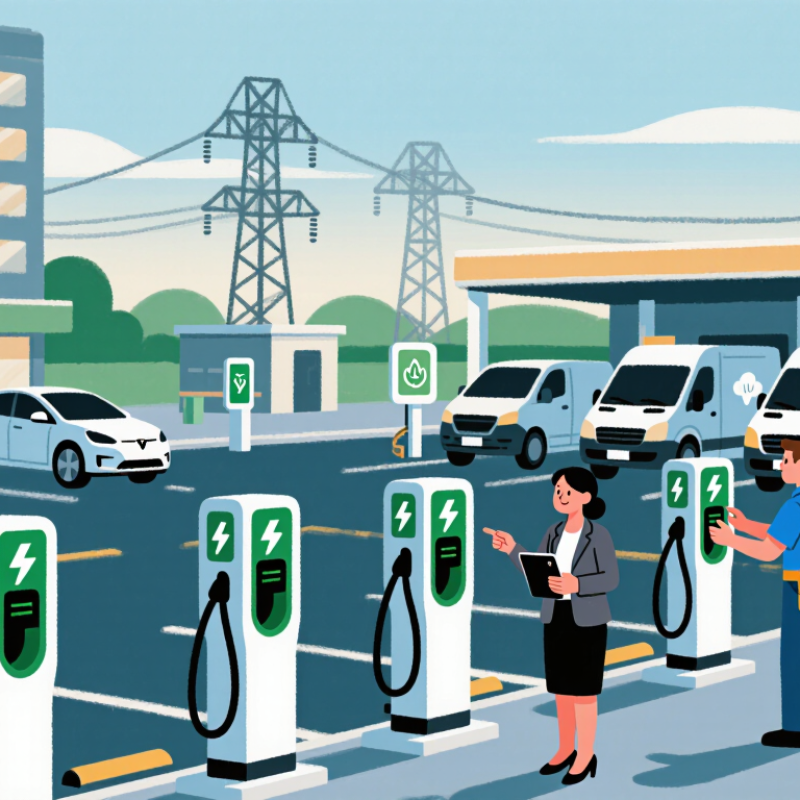
Define Business Needs Around Driver Dwell Time and Charging Demand
Choosing EV chargers for a business begins with a simple question: how long do vehicles actually stay parked?
A delivery van stopping for 25 minutes has different needs from an employee’s car parked for eight hours. Record arrival and departure times across normal weekdays, busy periods, and seasonal shifts. Include vehicle type, daily mileage, and whether drivers can move cars when charging finishes. Small details matter. A visitor may occupy a space longer than expected. That changes turnover.
Then estimate how many vehicles need energy at the same time, not just how many use the site each day. Compare those sessions with available electrical capacity and the energy each vehicle needs before leaving. A workplace with long dwell times may serve drivers with lower-power charging; a depot with short stops may need faster charging or more carefully scheduled access. Avoid sizing from a single busy day. It can exaggerate demand. A spreadsheet can also miss late arrivals, so check assumptions with drivers and facilities staff. If records are incomplete, begin with a modest installation and review actual usage after several weeks. That is not perfect, but measured demand is usually a better guide than guesswork.
Match Charger Speed to Dwell Time: DOE Rates Level 2 at 10–20 Miles per Hour
10 Tips for Choosing EV Chargers for Business?
Match Charger Speed to Dwell Time: DOE Rates Level 2 at 10–20 Miles per Hour
A charger’s useful speed depends on how long a vehicle stays parked. The U.S. Department of Energy’s Alternative Fuels Data Center estimates that Level 2 charging adds about 10–20 miles of range per hour. That is an estimate, not a promise. Vehicle efficiency, temperature, and charging limits can change the result.
For a workplace, hotel, or long-visit retail site, several hours parked may make Level 2 a practical fit. A car plugged in for four hours could gain roughly 40–80 miles under the DOE estimate. A brief grocery stop is different. Drivers may leave before much range is added. NREL workplace-charging research also points to the value of placing chargers where cars remain parked for extended periods.
Map real parking habits before choosing equipment. Track arrival times, average visit length, and peak occupancy for a typical week. A charger that looks fast on a specification sheet may still be poorly matched to a 30-minute stop. Conversely, paying for more speed can be unnecessary when cars sit for half a workday. I would still question estimates based on ideal conditions; winter mornings and shared power can narrow the gain. Small details matter. Cite: DOE AFDC, “Developing Infrastructure to Charge Electric Vehicles”; NREL workplace-charging research.
10 Tips for Choosing EV Chargers for Business? — Match Charger Speed to Dwell Time: DOE Rates Level 2 at 10–20 Miles per Hour
| Business Setting |
Typical Vehicle Dwell Time |
Charger Speed to Consider |
Approximate Range Added with Level 2 |
Planning Tip |
| Office or workplace parking |
6–8 hours |
Level 2 |
About 60–160 miles |
A longer parking window can make Level 2 suitable; consider managed charging when multiple vehicles share limited electrical capacity. |
| Hotel or overnight destination |
8–12 hours |
Level 2 |
About 80–240 miles |
Check typical guest arrival and departure patterns, and avoid assuming every vehicle can accept the full estimated charge. |
| Retail, restaurant, or entertainment venue |
1–3 hours |
Level 2; assess faster charging if turnover is a priority |
About 10–60 miles |
Estimate actual visit duration before selecting equipment; short visits may deliver only a modest amount of charge on Level 2. |
| Fleet vehicles parked between shifts |
4–10 hours |
Level 2 for scheduled parking; compare higher-power options for tight turnaround |
About 40–200 miles |
Use route distance, vehicle energy use, and shift schedules to determine required charging rather than sizing from dwell time alone. |
| Public parking garage |
2–6 hours |
Level 2 |
About 20–120 miles |
Consider utilization, parking turnover, access rules, and whether drivers can move vehicles when charging is complete. |
| Service, repair, or employee parking with uncertain schedules |
1–8 hours |
Level 2 for planned stays; consider flexible access and load management |
About 10–160 miles |
Set charging policies that prioritize vehicles with the greatest immediate need or shortest parking window. |
Level 2 charging is commonly estimated at about 10–20 miles of range per hour. Range figures above are simple estimates based on that rate multiplied by dwell time; actual results vary with vehicle efficiency, onboard charging capability, charger output, battery condition, temperature, and charging losses. Battery capacity and the vehicle’s state of charge can also limit the amount accepted.
Plan NEVI-Funded Sites for Four 150-kW DC Fast-Charging Ports (FHWA)
10 Tips for Choosing EV Chargers for Business?
Plan NEVI-Funded Sites for Four 150-kW DC Fast-Charging Ports (FHWA)
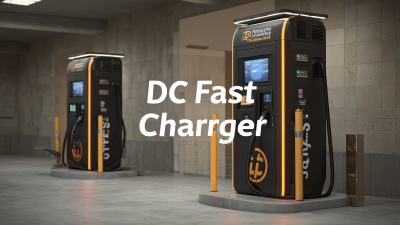
For a NEVI-funded site, plan around four DC fast-charging ports that can each deliver 150 kW simultaneously. That is the minimum power configuration in FHWA’s NEVI standards. It means the site may need to support 600 kW of charging demand, not merely install four dispensers. Ask the utility about available capacity, transformer upgrades, and service timelines before finalizing the layout. Power is not paperwork. A constrained connection can delay a project even when the equipment and parking plan look ready.
Leave space for accessible routes, turning vehicles, cable reach, and a queue that will not block traffic. Show drivers where to enter and exit, especially when larger vehicles arrive. Consider lighting, drainage, snow storage, and room for maintenance crews. These details are easy to overlook on a clean site drawing. Small details matter. The International Energy Agency’s Global EV Outlook 2024 reported that public charging points grew by 40% worldwide in 2023, while fast chargers grew by 55%. That growth supports planning for demand, but it does not predict use at your specific location. Review traffic patterns and nearby charging options; then test the layout with realistic vehicle movements. I would revisit those assumptions as local demand changes. A plan can look efficient on paper and still feel awkward at rush hour.
Compare Network Reliability: FHWA Requires 97% Uptime at NEVI-Funded Sites
A charger that looks available on a map may still fail when a driver plugs in. For NEVI-funded sites, federal rules require at least 97% uptime for each charging port, calculated monthly under 23 CFR 680.116. Compare port-level records, not a site-wide average; one reliable dispenser can hide another that repeatedly faults. Ask how providers define downtime and document outages. Small gaps matter.
Tips: Request twelve months of monthly uptime logs, fault codes, and repair times. Check whether reports distinguish equipment failures from power or communications outages. Test the charger during busy periods, not just during a scheduled demonstration. Confirm who responds after hours. A dashboard alone is not proof.
Real-world performance deserves scrutiny. The 2024 U.S. Public Charging Study reported that 19% of public charging visits did not result in charging, up from 18% in 2023. That figure does not measure NEVI uptime, but it shows why a technical availability score can miss driver experience. Review failed-session records alongside uptime, and ask staff to verify repairs on-site. Logs can be incomplete; that is worth acknowledging before signing a service agreement.
Evaluate Lifecycle Costs, Connector Compatibility, and Future Expansion
Choosing chargers by purchase price alone can make a budget look tidy while hiding years of operating costs. Estimate installation expenses, including trenching, electrical upgrades, and work needed to protect equipment from weather or vehicle impact. Then compare energy charges, software fees, maintenance, and likely downtime. A charger near a busy loading bay may need more frequent repairs. That adds up. Ask how quickly service is available and whether replacement parts are easy to obtain. Cost forecasts can look precise, but they depend on assumptions about daily use; treat them as estimates, not promises.
Check connector compatibility against the vehicles your business uses now and expects to add. Consider charging speed, cable reach, and whether drivers can park comfortably without stretching cables across walkways. That matters. For mixed fleets, confirm that each vehicle can charge reliably at the planned power level. A mismatch may not be obvious until the first vehicle arrives, which is an awkward way to learn.
Future expansion deserves space in today’s design. Check available electrical capacity, and consider installing conduit or reserving panel space before paving or parking layouts become fixed. Load management can help several chargers share limited power, though it will not solve every capacity problem. Plan for change. A phased rollout can test real demand before more units are installed; it can also reveal that the original forecast was too optimistic. Make sure future charger locations will not block deliveries, accessible parking, or routine vehicle movement.
Choosing EV Chargers for Business: Compare Power Levels
Representative rated power levels illustrate the range of charging options available for business sites. Actual output depends on the charger, vehicle, and electrical installation.
Planning note: Higher power can shorten charging time but may increase equipment and installation costs. Before choosing, check connector compatibility across your fleet, estimate lifecycle costs and expected utilization, and confirm that the site can support future expansion.



 Phone
 Send Email
 whatsapp
 Facebook
 Youtube